When it comes to freight shipping from South Korea to Argentina, FWFreight is a company that clients can trust implicitly. We have proven our competency in handling a multitude of shipments from South Korea to various international destinations. Our core services encompass a comprehensive range of logistics operations, including sea, air, rail, and truck services. These are meticulously designed to cater to the versatile needs of our diverse clientele, ranging from domestic exporters in South Korea to global importers worldwide. We also offer specialized forwarding services that promise swift and secure delivery of goods, affirming our reputation as a leading player in freight and international shipping from South Korea.
From a service perspective, our company stands unmatched in its commitment to delivering unparalleled services to every client. We adhere to a customer-centric approach, ensuring that every interaction is personal, professional, and purposeful. FWFreight's strength lies in its ability to weave together a complex network of shipping resources, industry connections, and logistical tools to deliver the best freight solutions in the world. We are more than just a logistics company. We see ourselves as partners in our clients' growth, offering them tailored solutions that help drive their business forward. As a testament to our commitment, we continue to refine our services, striving to redefine standards in the industry.
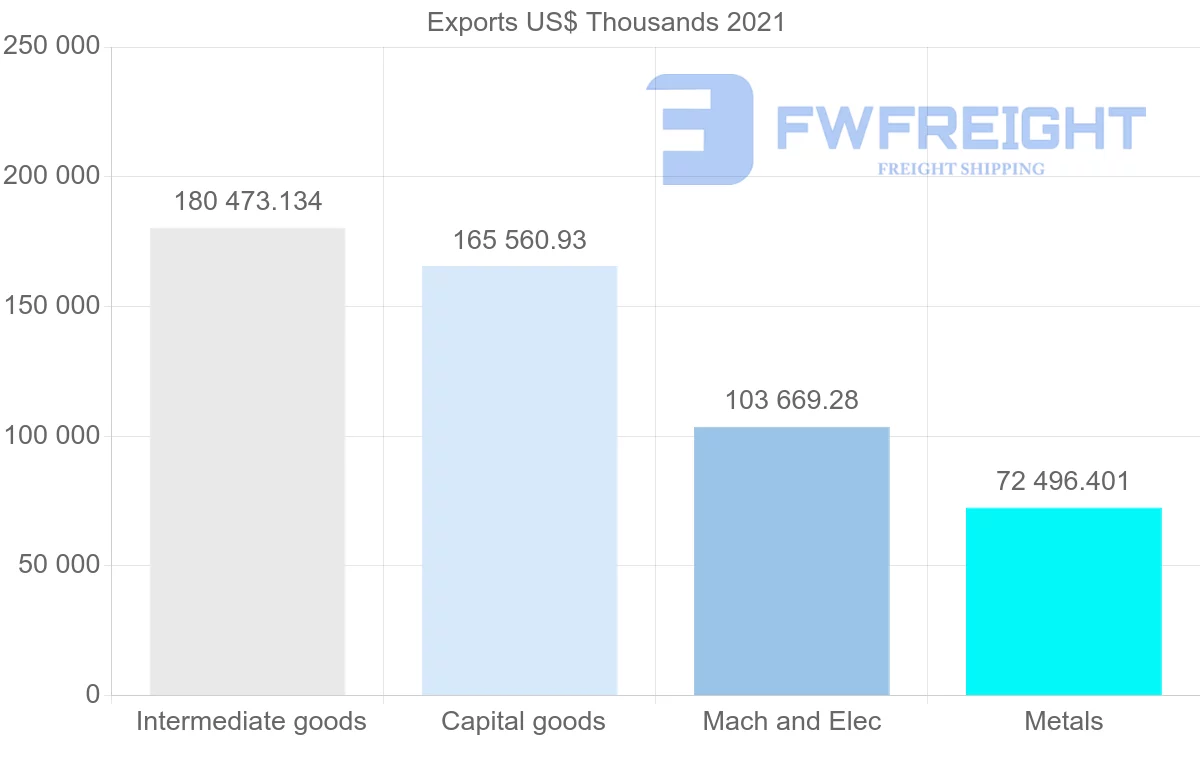 According to the data from the graphic, the top 5 export goods from South Korea to Argentina in 2021 are as follows: Intermediate goods valued at $180.47 mil, Capital goods valued at $165.56 mil, Machinery and Electronics valued at $103.67 mil, and Metals at $72.50 mil. These goods make up a significant portion of South Korea's total export volume to Argentina, with Intermediate goods and Capital goods leading the way in terms of value.
Exports in these categories are important to South Korea as they represent high-value products that are typically produced in technologically advanced regions of the country. For example, Machinery and Electronics are often manufactured in the Seoul Metropolitan Area, which is home to many of South Korea's largest tech companies. Capital goods, on the other hand, are often produced in the Gyeonggi Province, which is known for its industrial infrastructure. These goods play a crucial role in driving South Korea's economy and maintaining its status as a leading exporter.
These goods are important for import into Argentina as they are essential for the country's industrial development and infrastructure projects. Machinery and Electronics, for example, are necessary for Argentina to modernize its manufacturing sector and improve its technological capabilities. The regions in Argentina where these goods are supplied vary, but major cities like Buenos Aires and Córdoba are key recipients due to their strong manufacturing bases. Metals are also crucial for Argentina's construction industry, with cities like Rosario and Mendoza relying on imports for their infrastructure projects.
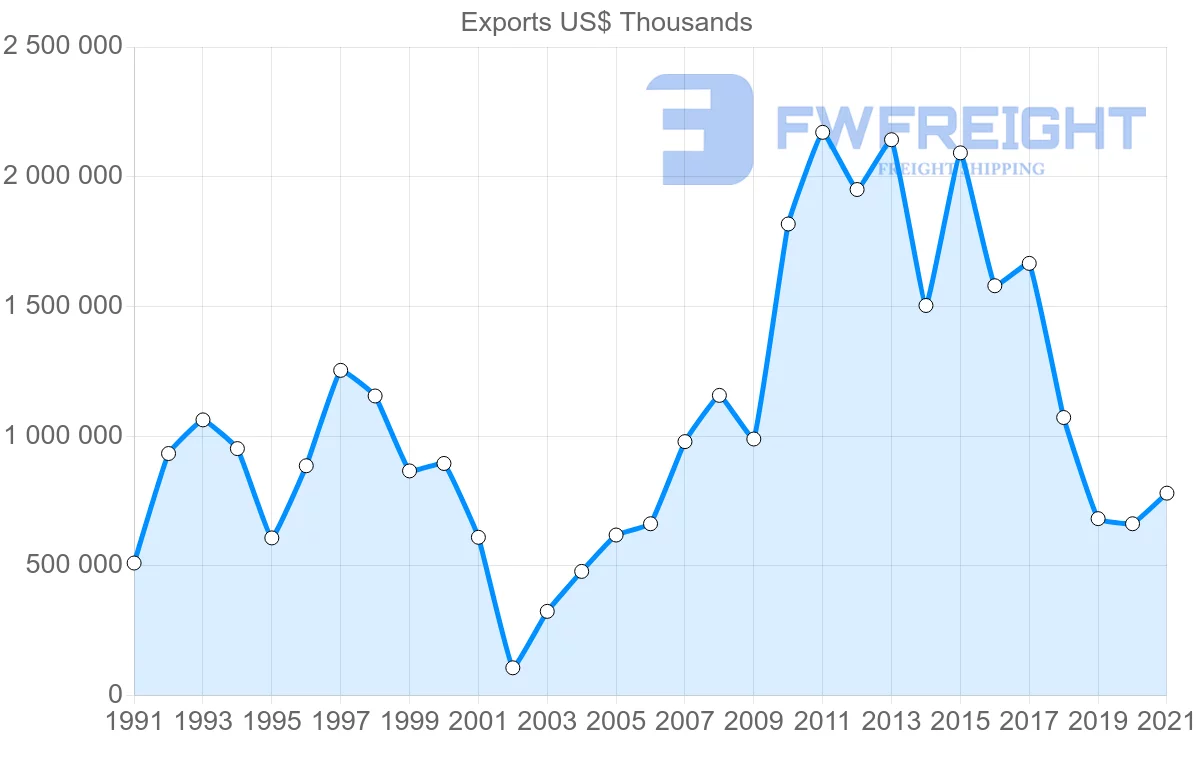 Over the past 30 years, we have seen significant fluctuations in the All Product Export from South Korea to Argentina. In 1991, the export value was 511.04 million USD and reached its peak in 2013 at 2.14 billion USD. There have been ups and downs in between, with noticeable growth in the early 2000s, a slight decline in the late 2000s, and a resurgence in the 2010s. The most recent data for 2021 shows a value of 780.32 million USD. Overall, there has been a steady increase in trade between the two countries, with a few periods of decline.
The main product groups exported from South Korea to Argentina include electronics, automobiles, machinery, and chemicals. Electronics have been a major export category, with South Korean companies such as Samsung and LG dominating the market. Automobiles have also been a significant export, with Hyundai and Kia being popular brands in Argentina. Machinery and chemicals have seen steady growth in recent years, as South Korea's manufacturing industry continues to expand. These product groups have played a crucial role in the trade relationship between the two countries, contributing to the overall growth in exports over the past few decades.
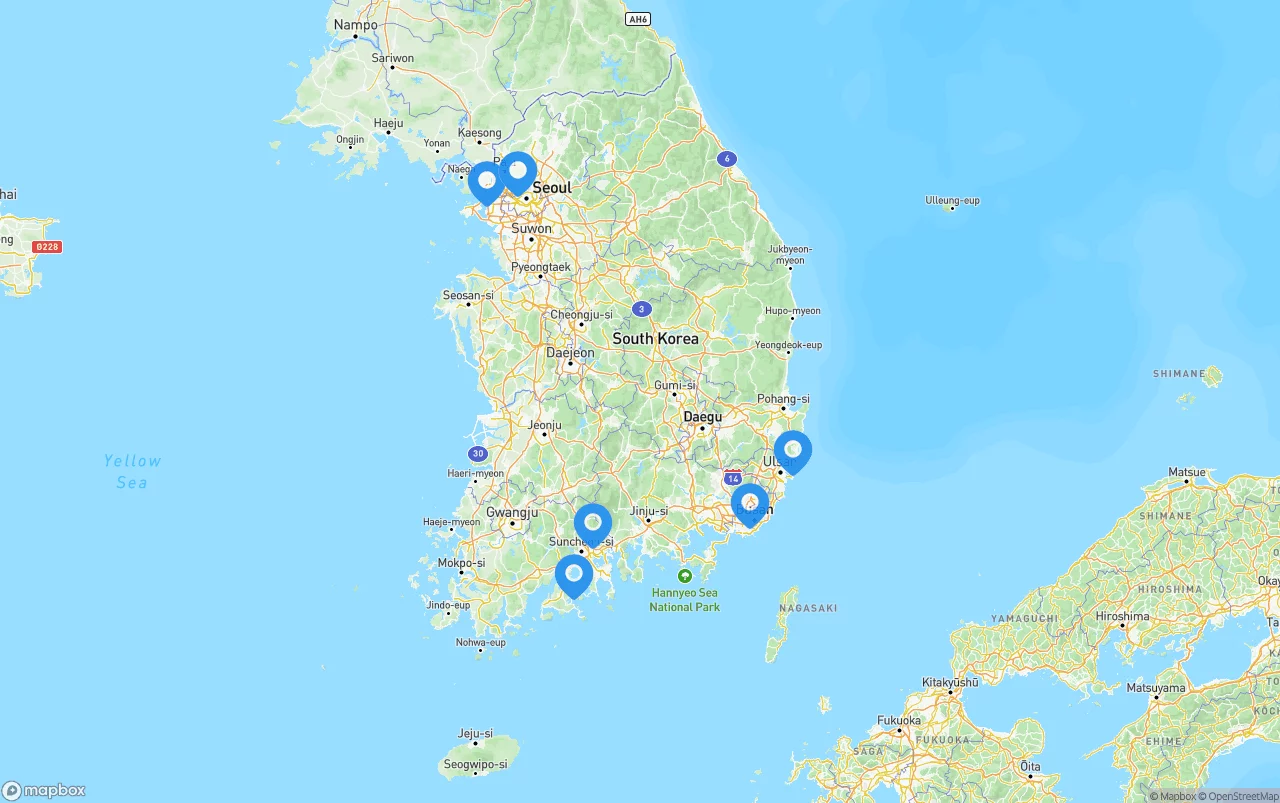 - Gwangyang Port: Gwangyang Port is located on the southern coast of South Korea and is the third largest port in the country. It is known for its advanced facilities and efficient operations, making it a key hub for international trade. The port handles a variety of cargo including containers, bulk cargo, and oil products. Gwangyang Port is also a major transshipment hub in Northeast Asia.
- Incheon Port: Incheon Port is the largest port in South Korea and is located in the city of Incheon, west of Seoul. It is a major gateway for trade with China and handles a wide range of cargo including containers, bulk cargo, and passenger ferries. Incheon Port is known for its state-of-the-art facilities and efficient operations, making it a key player in the global shipping industry.
- Kwangyang Port: Kwangyang Port is located in the city of Gwangyang on the southern coast of South Korea. It is the largest port in the country in terms of cargo handled and is a key hub for international trade. Kwangyang Port has modern facilities and infrastructure to handle a variety of cargo including containers, bulk cargo, and oil products. The port plays a critical role in South Korea's economy and is a major player in the global shipping industry.
- Pusan Port: Pusan Port, also known as Busan Port, is the largest port in South Korea in terms of container traffic. It is located in the city of Busan on the southeastern coast of the country. Pusan Port is a major hub for international trade and handles a wide range of cargo including containers, bulk cargo, and oil products. The port has modern facilities and efficient operations, making it a key player in the global shipping industry.
- Ulsan Port: Ulsan Port is located in the city of Ulsan on the southeastern coast of South Korea. It is a major port for the country's industrial sector, handling a variety of cargo including oil products, chemicals, and bulk cargo. Ulsan Port is known for its specialized facilities for handling industrial cargo and plays a crucial role in supporting South Korea's export-oriented economy.
Additional ports:
- Seoul Port: Seoul Port is located on the Han River in the capital city of Seoul. It primarily handles passenger ferries and cruise ships, serving as a gateway for travel to nearby countries such as China and Japan. Seoul Port also handles some cargo traffic, particularly for goods bound for the inland areas of South Korea.
Please note that the information provided is a brief overview and does not cover all aspects of each port's operations
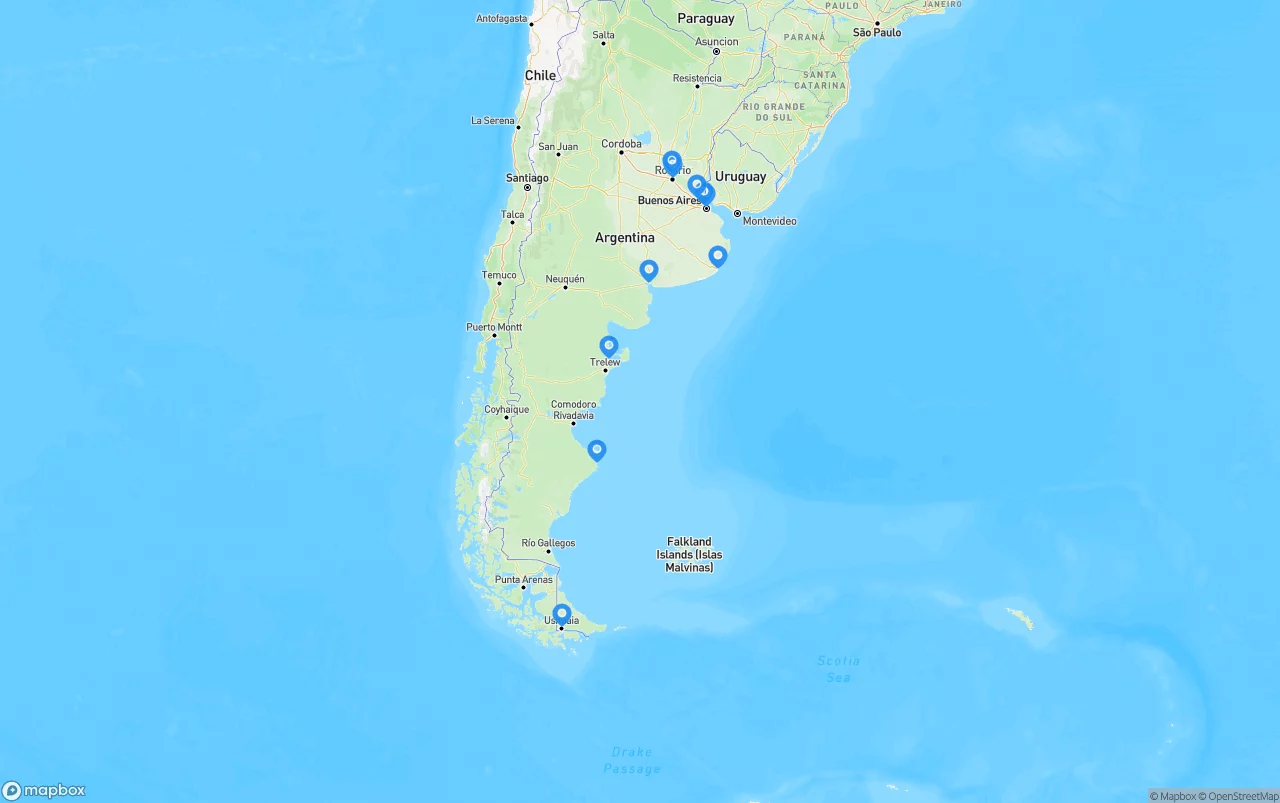 - Buenos Aires Port: Buenos Aires Port is the largest port in Argentina and one of the busiest in South America. It is located on the Rio de la Plata and handles a wide range of cargo, including containers, bulk commodities, and general cargo. The port is equipped with modern facilities and has excellent connectivity to road and rail networks.
- Bahia Blanca Port: Bahia Blanca Port is strategically located in the south of Buenos Aires province. It is a major hub for the export of agricultural products, petroleum, and chemicals. The port has modern infrastructure and deep-water berths that can accommodate large vessels.
- Mar del Plata Port: Mar del Plata Port is a key fishing port in Argentina and one of the largest in Latin America. It handles a significant volume of seafood products for both domestic consumption and export. The port also has facilities for general cargo and cruise ships.
- Rosario Port: Rosario Port is situated on the Parana River and is an important export gateway for agricultural products, particularly soybeans, wheat, and corn. The port has modern grain terminals and is well-connected to the country's agricultural heartland.
- San Lorenzo Port: San Lorenzo Port is located near Rosario and specializes in the handling of grains and oilseeds. It is a key export point for agricultural commodities produced in the region. The port has efficient loading facilities and is crucial for the country's export economy.
Other ports in Argentina: Puerto Deseado Port, Puerto Madryn Port, Santa Fe Port, Ushuaia Port, Zarate Port.
Looking for a freight forwarder in South Korea and Argentina? There is a list of the best freight forwarders, cargo agents, air, sea, land, river, railroad transport companies, logistics, brokers cargo services in South Korea and Argentina. Elevate your business's supply chain effectiveness by selecting the ideal freight forwarding partner.
Maximize your logistics efficiency between South Korea and Argentina by partnering with premier freight forwarders. These expert forwarders invest time to deeply understand your unique shipping requirements. Through a personalized and meticulous approach, they guarantee seamless shipment execution across borders, ensuring timely arrivals at every destination.


At FWFreight, we offer comprehensive international container shipping services tailored to meet your needs. We provide efficient and reliable shipping solutions from South Korea to Argentina. Here's a breakdown of our shipping options:
LCL from South Korea to Argentina (Less than Container Load):
For smaller shipments that don't fill an entire container, our LCL service is the perfect solution. We consolidate multiple shipments into one container, saving you time and money. With regular departures to Argentina from South Korea. Your cargo will reach its destination securely and on schedule.
FCL from South Korea to Argentina (Full Container Load):
If you have enough cargo to fill a whole container, our FCL service offers exclusive use of a container. This ensures your goods remain secure and minimizes the risk of damage during transit. Choose to 20 FT, 40 FT, or 40 HC containers, depending on the volume and nature of your cargo.
Air Freight from South Korea to Argentina:
When time is of the essence, our air freight service provides swift delivery for urgent shipments. With extensive networks and partnerships, we guarantee efficient handling and timely delivery of your cargo to Argentina to destinations across the globe.
Below is a table with Shipping Rates from South Korea to Argentina for various types of containers. You can use these Quick Quotes from South Korea to Argentina as a guideline. To get an Instant Rate from South Korea to Argentina for the necessary date, you can send a request.
For container transportation from South Korea to Argentina, various factors come into play. The size of the shipping container, the type of goods to be shipped, distance of the destination, and the shipping method (either Full Container Load or Less than Container Load) all directly affect the cost.
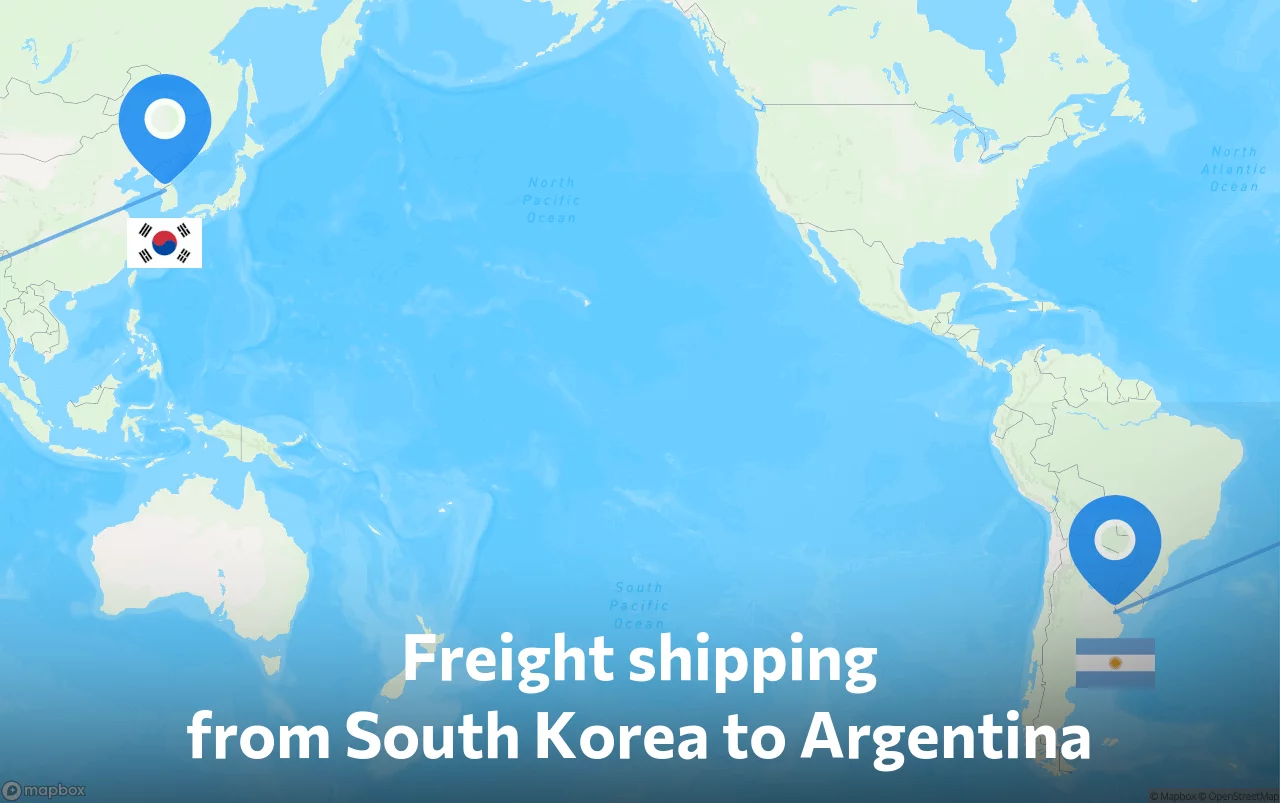 Shipping cargo from South Korea to Argentina by sea typically takes between 30 to 45 days. The exact time frame can vary depending on several factors, such as the specific ports of departure and arrival, the shipping route taken, weather conditions, and the type of cargo being transported. For example, shipping from Busan, South Korea, to Buenos Aires, Argentina, may take longer than shipping from Incheon, South Korea, to Rosario, Argentina. Additionally, the speed of shipping can be influenced by the type of vessel used, with larger container ships usually traveling faster than smaller vessels.
Customs clearance plays a significant role in determining the overall shipping time between South Korea and Argentina. South Korea has efficient customs procedures that help expedite the clearance process, with an average delay time of around 1-2 days. On the other hand, Argentina's customs clearance process can be more complex and time-consuming, with an average delay time of about 3-5 days. To mitigate delays, shippers can work with experienced logistics partners, such as FWFreight, who specialize in the transport service on this route and have established relationships with customs officials in both countries. By leveraging their expertise and connections, shippers can navigate the customs clearance process more efficiently and minimize potential delays, ensuring timely delivery of their cargo.
 As a leading player in the global freight forwarding industry, FWFreight specializes in freight shipping to Argentina from locations around the world. Our core services are broad, encompassing sea, air, rail, and truck shipments. We pride ourselves on providing an unsurpassed level of care and professionalism to all our customers, ensuring their cargo arrives promptly and safely. We understand that each shipment is unique, requiring individual attention and a tailored solution. So, whether you're a domestic exporter looking for the most efficient route to Argentina, or an importer seeking a reliable logistics partner for international shipping to Argentina from other countries, FWFreight is the right choice for meeting your needs.
Our company stands out from the competition through our unwavering commitment to exceed client expectations in every aspect of our service delivery. From first contact to final delivery, we strive to provide the best service in the world, with an emphasis on clear communication, prompt response, and meticulous attention to detail. Apart from our comprehensive logistics services spanning air, sea, rail, and truck, we also offer tailored forwarding services to cater to the specific requirements of our diverse clientele. Regardless of the size, nature, or destination of your cargo, our shipping company assures you of a seamless and cost-effective shipping experience. Partner with us, and let us turn your logistics challenges into success stories.