If you have freight shipping from Singapore to Philippines needs, then FWFreight is your go-to solution provider. As a leading player in the logistics industry, our core services focus on expertly handling shipments from Singapore to various global destinations. Leveraging a combination of sea, air, rail, and truck services, we ensure your goods are delivered in immaculate condition and within the agreed time frame. For businesses demanding international shipping from Singapore, our comprehensive forwarding services dovetail seamlessly with regional exporters, providing reliable and efficient delivery solutions.
From a service standpoint, FWFreight stands apart from the competition, boasting a meticulously crafted, customer-centric approach. We understand that in the fast-paced world of freight and logistics, constant innovation and adaptability is key. With our team of dedicated professionals, we ensure that every client benefits from an individualized service tailored to their specific requirements. From domestic exporters to global importers, we strive to provide the best service in the world, offering an all-encompassing range of logistics solutions. This way, we don't just move products - we build strong, lasting relationships with each of our esteemed clients, regardless of the size, frequency, or complexity of their shipments.
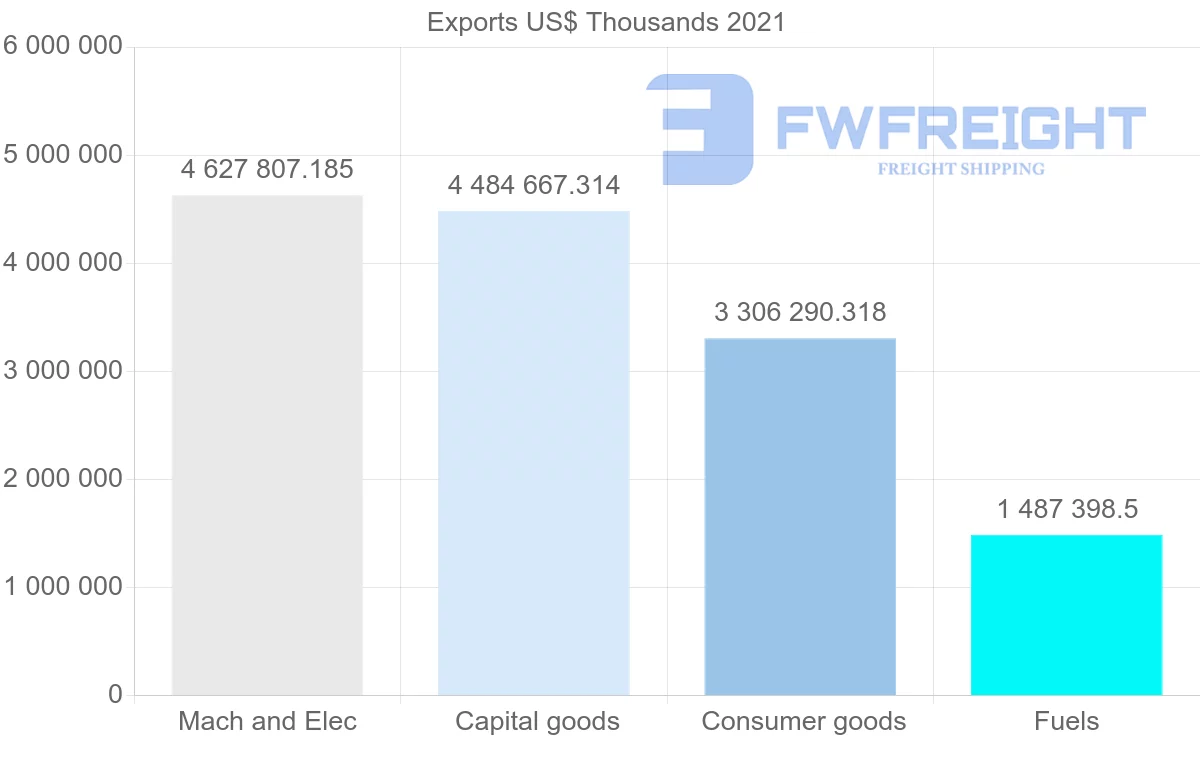 In 2021, the top 5 export goods from Singapore to the Philippines were Machinery and Electronics with a value of $4,627.81 million, Capital goods with $4,484.67 million, Consumer goods with $3,306.29 million, and Fuels with $1,487.40 million. These categories encompass a wide range of products such as electronic components, machinery equipment, industrial machinery, vehicles, pharmaceuticals, and petroleum products. Machinery and Electronics and Capital goods are the leading export goods, accounting for a significant portion of the total export volume.
Exports in these categories are crucial to Singapore's economy as they represent high-value goods that contribute significantly to the country's GDP. These goods are primarily manufactured in industrial zones such as Jurong, Tuas, and Woodlands, where there is a concentration of manufacturing and electronics companies. The strategic location of Singapore as a major shipping hub in Southeast Asia also plays a key role in facilitating the export of these goods to the Philippines and other countries in the region.
These goods are important for import into the Philippines as they meet the country's demand for machinery, electronic products, consumer goods, and fuels. The Philippines relies on imports to supplement its domestic production and meet the needs of its growing population. Regions such as Metro Manila, Calabarzon, and Central Luzon are major hubs for the distribution and consumption of these goods in the Philippines. The strong trade relations between Singapore and the Philippines help ensure a steady supply of these essential goods to support the Philippine economy.
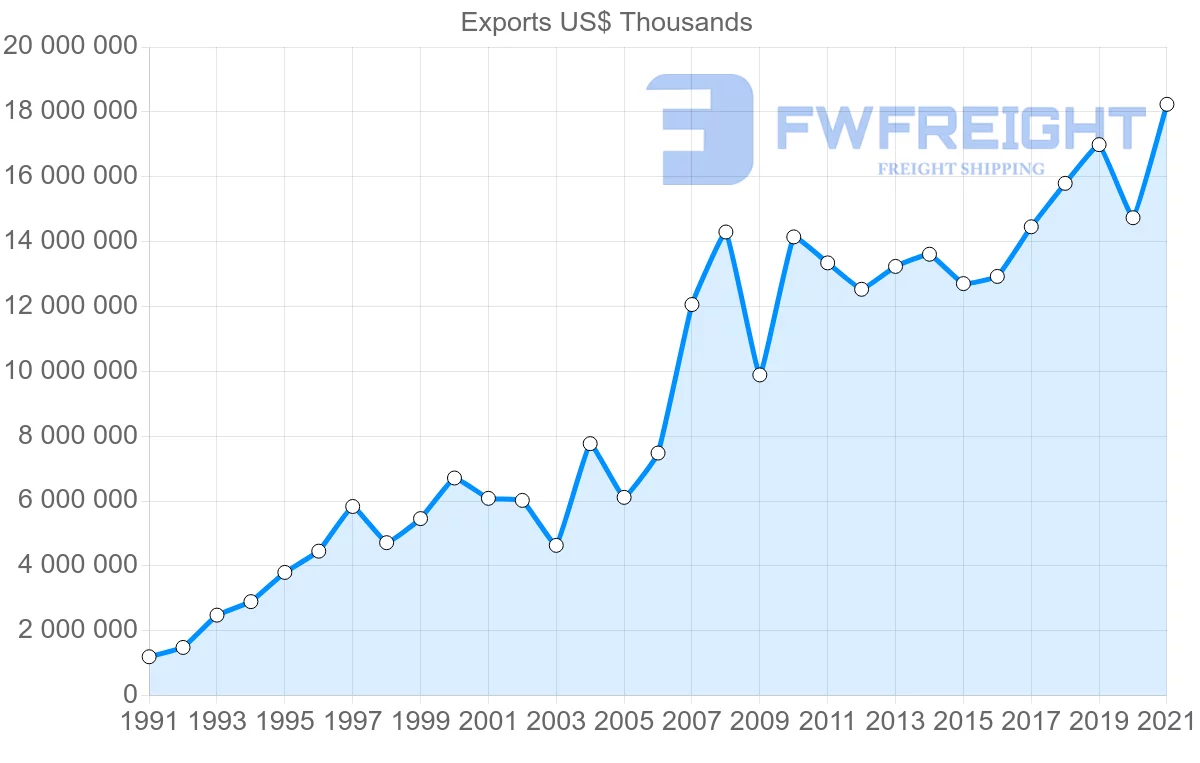 Over the past 30 years, the All Product Export from Singapore to Philippines has shown significant growth. The total value of exports has increased from $1,197,462.645 million in 1991 to $18,233,008.697 million in 2021, showing a substantial increase of over 1500%. The trade relationship between the two countries has strengthened, with exports consistently growing throughout the years. Major developments in trade between Singapore and the Philippines include a significant jump in exports from 2009 to 2010, where the value almost doubled from $9,887,935.247 million to $14,143,960.653 million. Another notable increase occurred from 2014 to 2015, with exports growing from $12,528,719.595 million to $13,342,990.05 million.
The main product groups exported from Singapore to the Philippines include electronic products, machinery and mechanical appliances, mineral fuels, and pharmaceutical products. Electronic products, such as integrated circuits and computers, make up a significant portion of the exports, reflecting Singapore's strength in the technology sector. Machinery and mechanical appliances, which include parts for industrial machinery, also feature prominently in the trade relationship between the two countries. Mineral fuels, such as oil and petroleum products, are another key export category, highlighting the importance of energy trading between Singapore and the Philippines. Pharmaceutical products, including medications and medical supplies, are also significant exports from Singapore to the Philippines, showcasing the growing demand for healthcare products in the region.
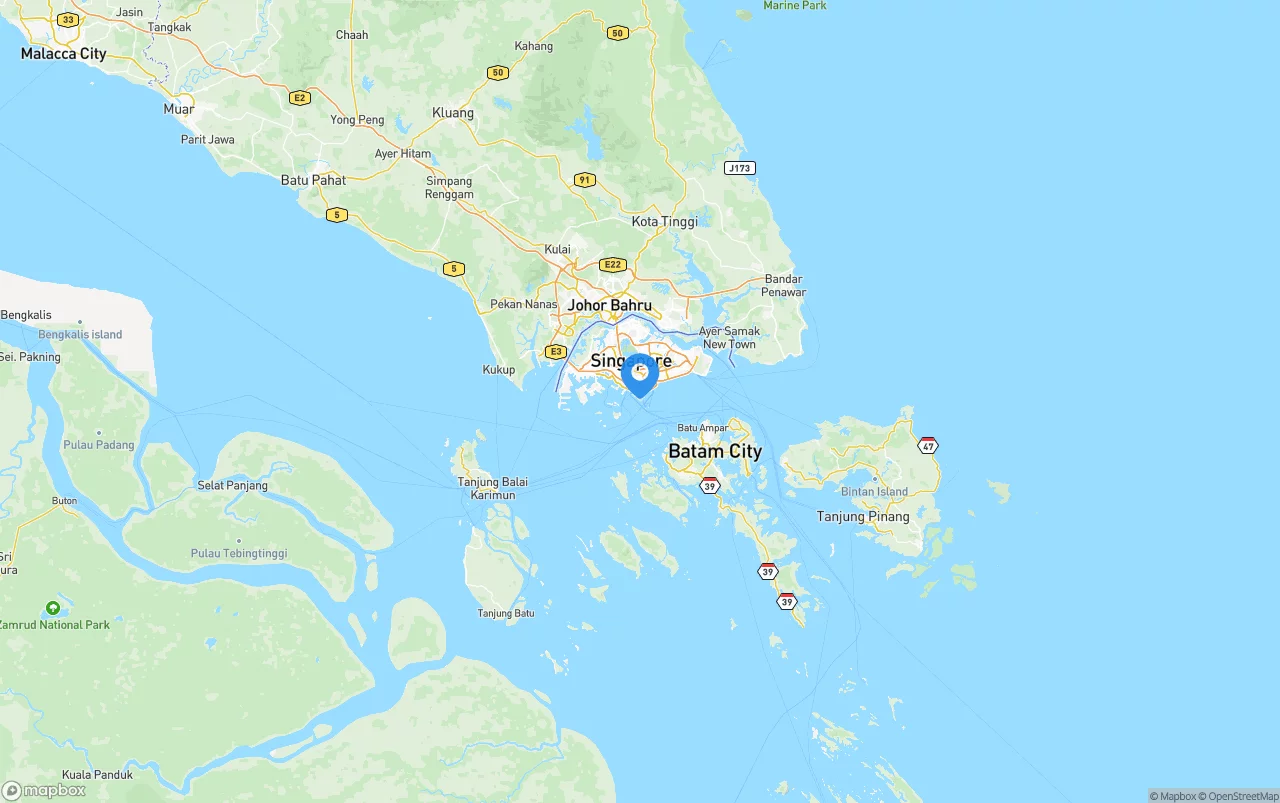 - Singapore Port: Singapore Port is the largest and busiest port in Singapore, handling a significant portion of the country's maritime trade. It is a major hub for container shipping, handling millions of TEUs annually. The port is equipped with state-of-the-art facilities and infrastructure to efficiently handle various types of cargo, including containers, bulk cargo, and liquid bulk. Singapore Port plays a crucial role in connecting Singapore to major global trade routes.
- Jurong Port: Jurong Port is another important port in Singapore, specializing in handling bulk and breakbulk cargo. It is strategically located in the southwestern part of Singapore, providing convenient access to industrial areas and transportation networks. Jurong Port is equipped with modern facilities and equipment to handle a wide range of cargo, including bulk commodities, project cargo, and general cargo. The port plays a vital role in supporting Singapore's industrial and economic activities.
- Keppel Terminal: Keppel Terminal is a key container terminal located within Singapore Port. It is operated by PSA International, one of the world's leading port operators. Keppel Terminal is equipped with advanced container handling equipment and technology to ensure efficient and reliable operations. The terminal serves as a major gateway for container shipping in the region, connecting Singapore to global trade networks.
- Tanjong Pagar Terminal: Tanjong Pagar Terminal is another container terminal within Singapore Port, managed by PSA Singapore Terminals. It is strategically located in the central part of Singapore, offering convenient access to major transportation routes. Tanjong Pagar Terminal is equipped with modern infrastructure and facilities to handle a large volume of containers efficiently. The terminal plays a crucial role in facilitating the flow of goods and cargo in and out of Singapore.
- Sembawang Wharves: Sembawang Wharves is a key port in Singapore, specializing in handling general and project cargo. It is located in the northern part of Singapore, providing easy access to industrial areas and transportation networks. Sembawang Wharves is equipped with versatile facilities and equipment to handle a wide range of cargo, including steel products, machinery, and equipment. The port serves as an important gateway for trade and logistics activities in the region.
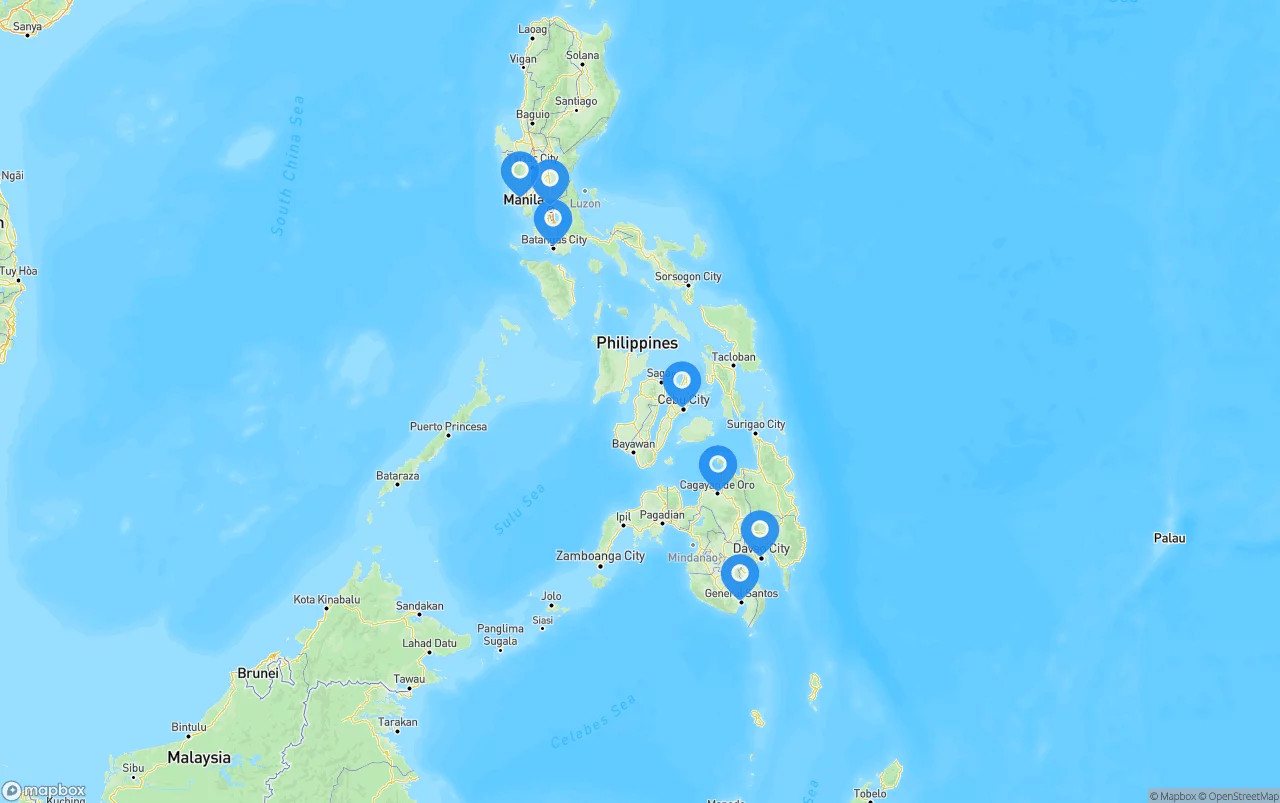 - Manila Port: Manila Port is the largest and busiest port in the Philippines, located in the capital city of Manila. It serves as the main gateway for international trade in the country, handling a wide range of cargo including containers, bulk, and breakbulk. The port is equipped with modern facilities and infrastructure to accommodate large vessels.
- Cebu City Port: Cebu City Port is a major seaport located in the central Visayas region of the Philippines. It is an important hub for domestic shipping and also handles some international cargo. The port plays a key role in connecting the different islands of the Philippines through ferry services.
- Davao Port: Davao Port is the main port serving the southern island of Mindanao. It is a strategic gateway for trade in the region, handling a variety of cargo including agricultural products, minerals, and general goods. The port is well-equipped to handle containerized cargo and bulk shipments.
- General Santos Port: General Santos Port is another key port located in Mindanao, specifically in the city of General Santos. The port primarily handles exports of agricultural products such as bananas, pineapples, and tuna. It is an important economic center for the region and plays a vital role in the country's trade.
- Subic Bay Port: Subic Bay Port is a former US naval base that has been converted into a major commercial port. It is strategically located near Manila and serves as an alternative to the congested Manila Port. The port is known for its modern facilities and efficient operations, particularly in handling containerized cargo.
- Other ports in the Philippines include Batangas Port in Luzon, Luzon Port in the northern region, Cagayan De Oro Port in Mindanao. These ports also play important roles in the country's maritime trade, catering to various types of cargo and vessels.
Looking for a freight forwarder in Singapore and Philippines? There is a list of the best freight forwarders, cargo agents, air, sea, land, river, railroad transport companies, logistics, brokers cargo services in Singapore and Philippines. Elevate your business's supply chain effectiveness by selecting the ideal freight forwarding partner.
Maximize your logistics efficiency between Singapore and Philippines by partnering with premier freight forwarders. These expert forwarders invest time to deeply understand your unique shipping requirements. Through a personalized and meticulous approach, they guarantee seamless shipment execution across borders, ensuring timely arrivals at every destination.


At FWFreight, we offer comprehensive international container shipping services tailored to meet your needs. We provide efficient and reliable shipping solutions from Singapore to Philippines. Here's a breakdown of our shipping options:
LCL from Singapore to Philippines (Less than Container Load):
For smaller shipments that don't fill an entire container, our LCL service is the perfect solution. We consolidate multiple shipments into one container, saving you time and money. With regular departures to Philippines from Singapore. Your cargo will reach its destination securely and on schedule.
FCL from Singapore to Philippines (Full Container Load):
If you have enough cargo to fill a whole container, our FCL service offers exclusive use of a container. This ensures your goods remain secure and minimizes the risk of damage during transit. Choose to 20 FT, 40 FT, or 40 HC containers, depending on the volume and nature of your cargo.
Air Freight from Singapore to Philippines:
When time is of the essence, our air freight service provides swift delivery for urgent shipments. With extensive networks and partnerships, we guarantee efficient handling and timely delivery of your cargo to Philippines to destinations across the globe.
Below is a table with Shipping Rates from Singapore to Philippines for various types of containers. You can use these Quick Quotes from Singapore to Philippines as a guideline. To get an Instant Rate from Singapore to Philippines for the necessary date, you can send a request.
For container transportation from Singapore to Philippines, various factors come into play. The size of the shipping container, the type of goods to be shipped, distance of the destination, and the shipping method (either Full Container Load or Less than Container Load) all directly affect the cost.
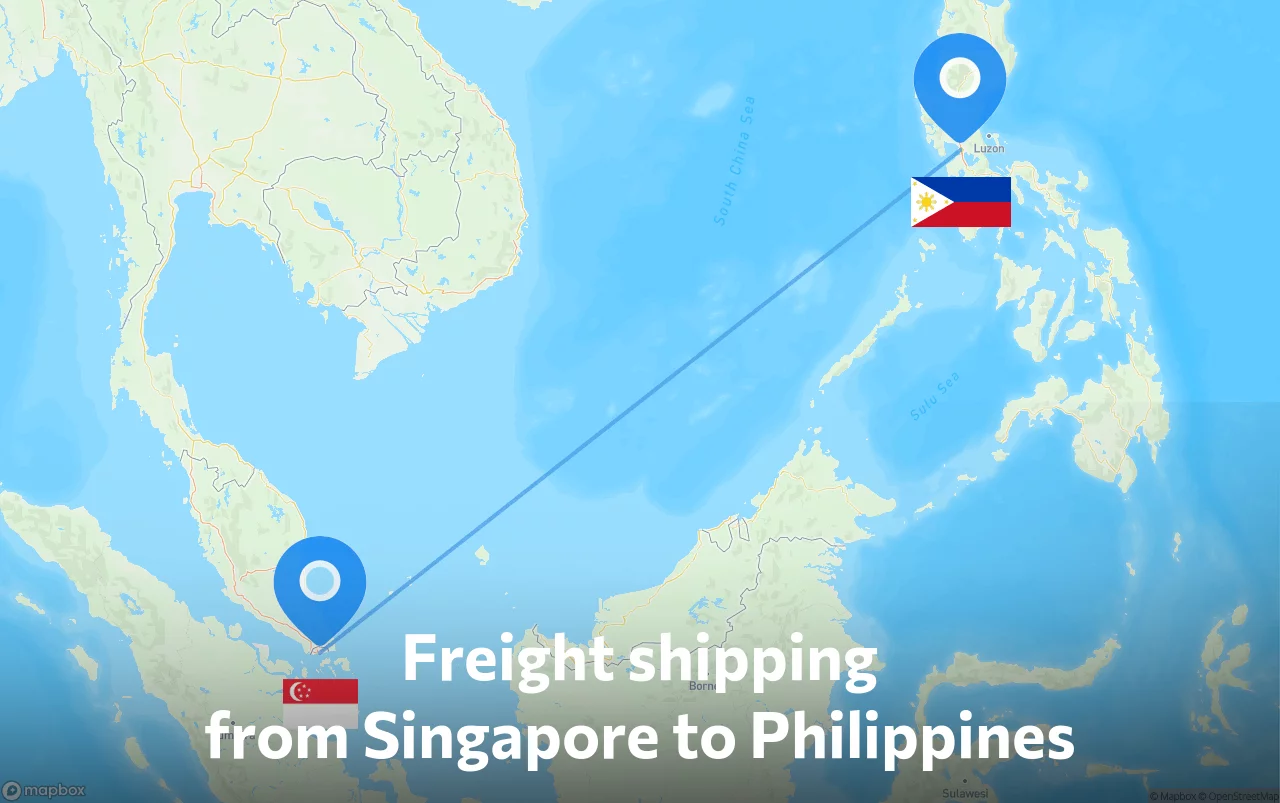 Shipping cargo from Singapore to the Philippines by sea typically takes around 3 to 5 days, depending on the specific ports of departure and arrival, as well as the type of vessel being used. Factors that determine the speed of shipping include the distance between the two countries, the route taken by the vessel, weather conditions, and the efficiency of the shipping company. Larger vessels may take longer to load and unload cargo, while smaller vessels may be faster but have limited capacity. Shippers can also choose between direct and transshipment services, with direct services generally being faster but more expensive.
Customs clearance processes in both Singapore and the Philippines can impact the overall shipping time. In Singapore, customs clearance is known for its efficiency and transparency, with an average delay time of around 1-2 days. However, in the Philippines, customs clearance can be more complex and time-consuming, with an average delay time of around 3-5 days. To mitigate delays, shippers can work with experienced logistics partners who are familiar with the customs procedures in both countries. Companies like FWFreight specialize in transport services between Singapore and the Philippines, offering expertise in navigating customs regulations and ensuring smooth and timely delivery of cargo. By partnering with such logistics providers, shippers can reduce the risk of delays and ensure that their cargo reaches its destination on schedule.
 At FWFreight, we take pride in offering premier freight shipping to the Philippines. Our core services are all-encompassing and designed to cater to each unique requirement in your shipment process. We understand that international shipping to the Philippines from other countries can pose a daunting challenge. However, our vast experience and expertise in managing import to the Philippines put us in a unique position to handle all your logistics requirements. We assure you of competitive pricing, paired with unparalleled service, making your shipping process flexible, secure, and problem-free. With us, you can be confident that you've chosen the reliable partner for your shipping needs.
From our service perspective, FWFreight is committed to providing world-class service to every customer. We provide all-inclusive logistics services encompassing sea, air, rail, and truck transportation, in addition to forwarding services. These offerings are tailored to meet the manifold needs of our diverse clientele, ranging from domestic exporters to global importers. Regardless of the type of transportation, our company ensures the best prices and efficient service to streamline your shipping process. Our dedicated team is always ready to assist you in navigating the complexities of global shipping. With our company, you not just get a shipping aid, but also a trusted partner committed to propelling your business forward.