When it comes to freight shipping from Madagascar to Djibouti, FWFreight is a company that clients can trust implicitly. We have proven our competency in handling a multitude of shipments from Madagascar to various international destinations. Our core services encompass a comprehensive range of logistics operations, including sea, air, rail, and truck services. These are meticulously designed to cater to the versatile needs of our diverse clientele, ranging from domestic exporters in Madagascar to global importers worldwide. We also offer specialized forwarding services that promise swift and secure delivery of goods, affirming our reputation as a leading player in freight and international shipping from Madagascar.
From a service perspective, our company stands unmatched in its commitment to delivering unparalleled services to every client. We adhere to a customer-centric approach, ensuring that every interaction is personal, professional, and purposeful. FWFreight's strength lies in its ability to weave together a complex network of shipping resources, industry connections, and logistical tools to deliver the best freight solutions in the world. We are more than just a logistics company. We see ourselves as partners in our clients' growth, offering them tailored solutions that help drive their business forward. As a testament to our commitment, we continue to refine our services, striving to redefine standards in the industry.
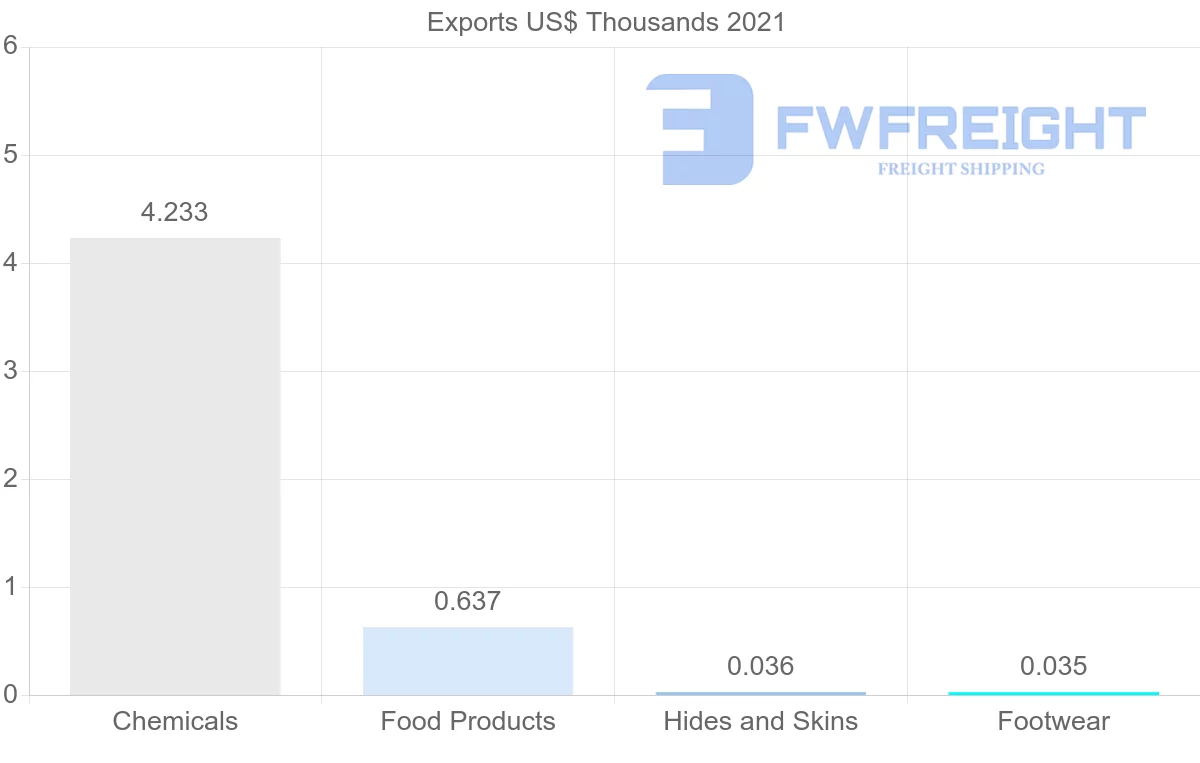 According to the graph, the top 5 export goods from Madagascar to Djibouti in 2021 are dominated by Chemicals, with a total value of 4.233 million US dollars. Following closely behind are Food Products at 0.637 million US dollars, Hides and Skins at 0.036 million US dollars, and Footwear at 0.035 million US dollars. These numbers indicate a clear hierarchy in terms of export volume, with Chemicals being the most significant export category.
Exports in these categories are important to Madagascar as they represent key sectors of the economy. Chemicals, for example, may include essential oils, perfumes, and pharmaceutical products which are produced in regions such as Antananarivo and Toamasina. Food Products, on the other hand, might consist of vanilla, seafood, and spices, which are sourced from areas like Sava and Diana. Hides and Skins are likely from livestock farming regions, while Footwear production may be concentrated in urban centers like Antsiranana and Fianarantsoa.
These goods are important for import into Djibouti as they fulfill a variety of consumer needs and industrial purposes. Chemicals may be used in manufacturing processes, Food Products provide sustenance for the population, Hides and Skins are utilized in the leather industry, and Footwear is a basic necessity. Djibouti likely receives these goods in its main port city, as well as in industrial zones and retail centers throughout the country. The continuous supply of these goods from Madagascar further strengthens the trade relationship between the two countries.
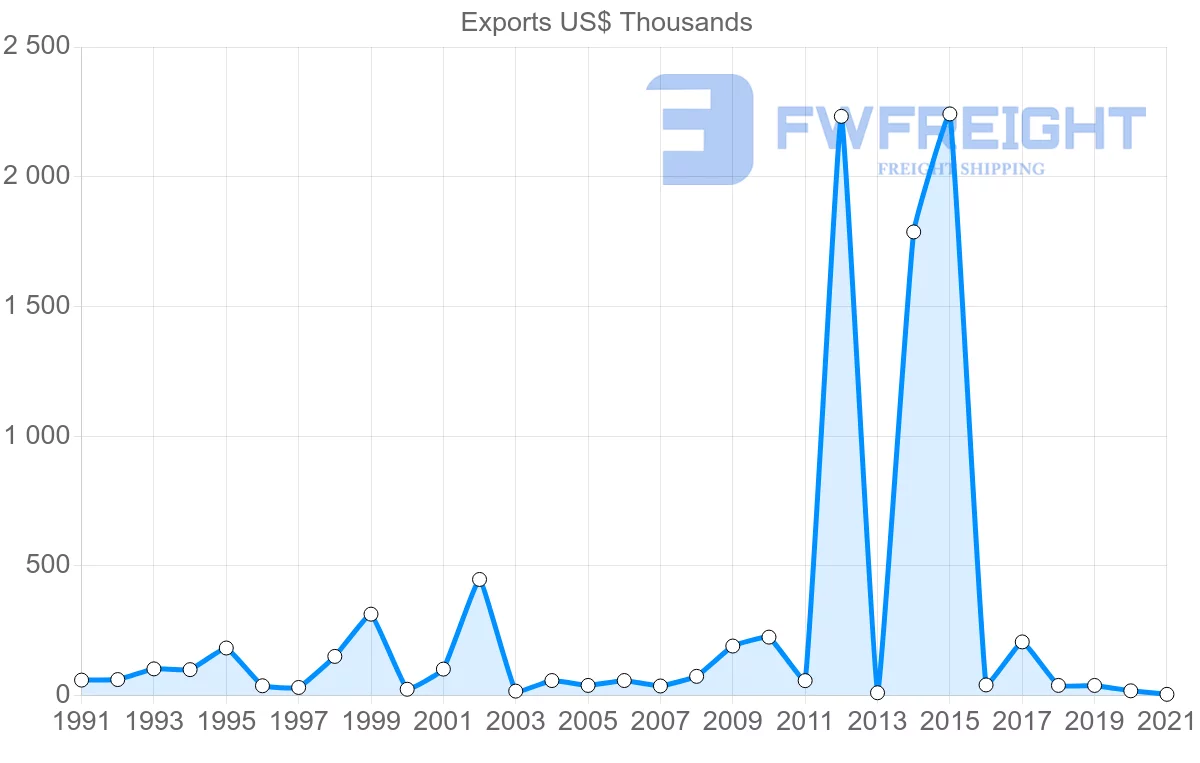 Over the past 30 years, the export of products from Madagascar to Djibouti has seen significant fluctuations and growth. In 1991, the value of exports stood at 59.747 million USD, gradually increasing to reach 2241.99 million USD in 2015, before dropping to 4.959 million USD in 2021. There were noticeable spikes in exports in 2002 and 2011, with values of 447.7 million USD and 1787.192 million USD respectively. Overall, there has been a general upward trend in exports, with some fluctuations due to various factors such as economic conditions and trade agreements between the two countries.
The main product groups that are exported from Madagascar to Djibouti include agricultural products such as vanilla, cloves, and coffee, as well as minerals like cobalt and nickel. Additionally, textiles and apparel, seafood, and essential oils are also prominent exports from Madagascar to Djibouti. These products reflect the natural resources and agricultural capabilities of Madagascar, as well as the demand for these products in Djibouti. Overall, the trade relationship between the two countries is characterized by a diverse range of products being exchanged, with both countries benefiting from the trade partnership.
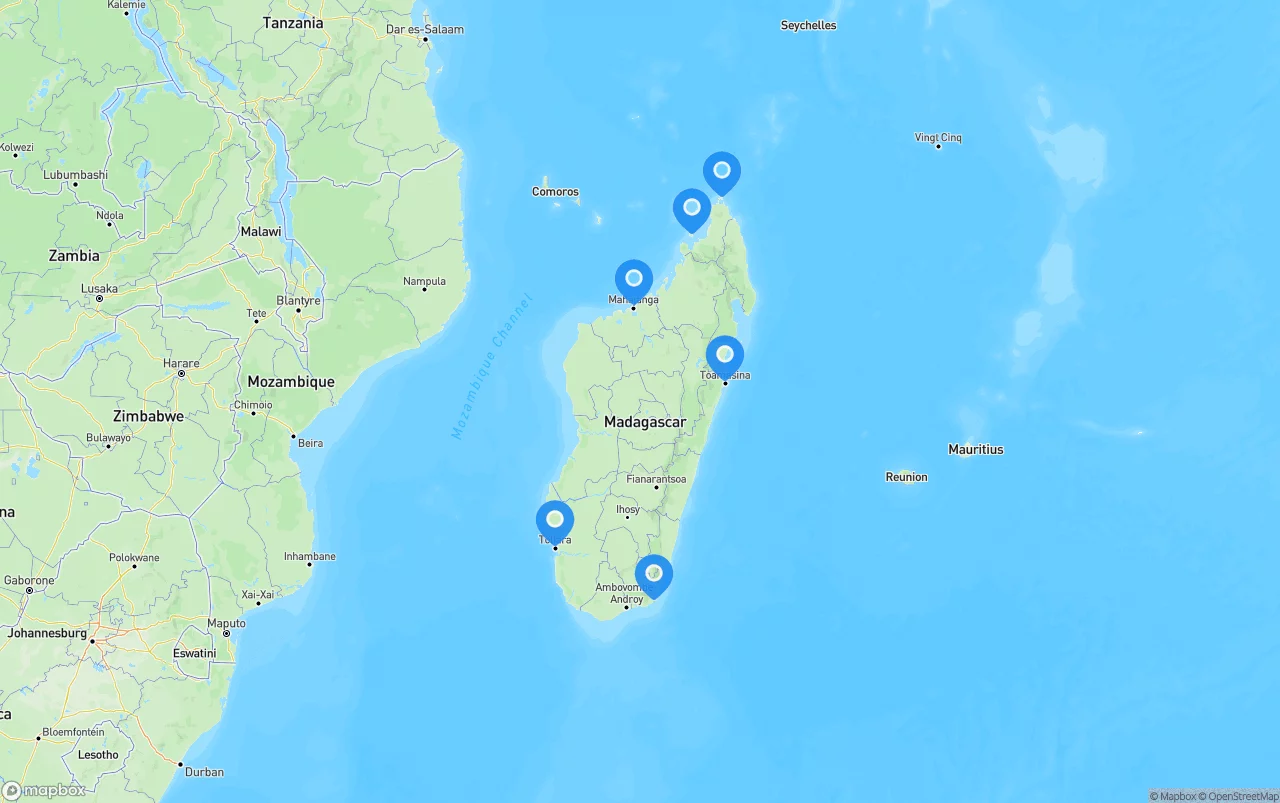 Toamasina Port: Toamasina Port is the largest commercial port in Madagascar, handling a significant portion of the country's imports and exports. It is strategically located on the east coast of the island, making it a key gateway for trade with other countries. The port has modern facilities for handling containers, bulk cargo, and general cargo.
Antsiranana Port: Antsiranana Port, also known as Diego Suarez, is located in the northern part of Madagascar. It is primarily a commercial port, handling both imports and exports. The port has a natural deep harbor, making it suitable for large vessels. Antsiranana Port plays a crucial role in facilitating trade with countries in the Indian Ocean region.
Majunga Port: Majunga Port is situated on the northwest coast of Madagascar. It is a major port for both commercial and container shipping. The port has terminals for handling various types of cargo, including containers, bulk goods, and petroleum products. Majunga Port is an important hub for trade with nearby African countries and beyond.
Tolagnaro Port: Tolagnaro Port, also known as Fort Dauphin, is located in the southeastern part of Madagascar. It serves as a key port for exporting minerals and agricultural products from the region. The port has facilities for handling bulk cargo and has attracted investment in recent years to expand its capabilities.
Nosy Be Port: Nosy Be Port is a smaller port located on the island of Nosy Be, off the northwest coast of Madagascar. It mainly caters to cruise ships and tourist boats, as Nosy Be is a popular tourist destination. The port also handles some local trade and fishing activities. Nosy Be Port contributes to the island's economy through tourism and maritime activities.
Additional ports: Toleary Port is a small port on the west coast of Madagascar, primarily used for local fishing and boating activities.
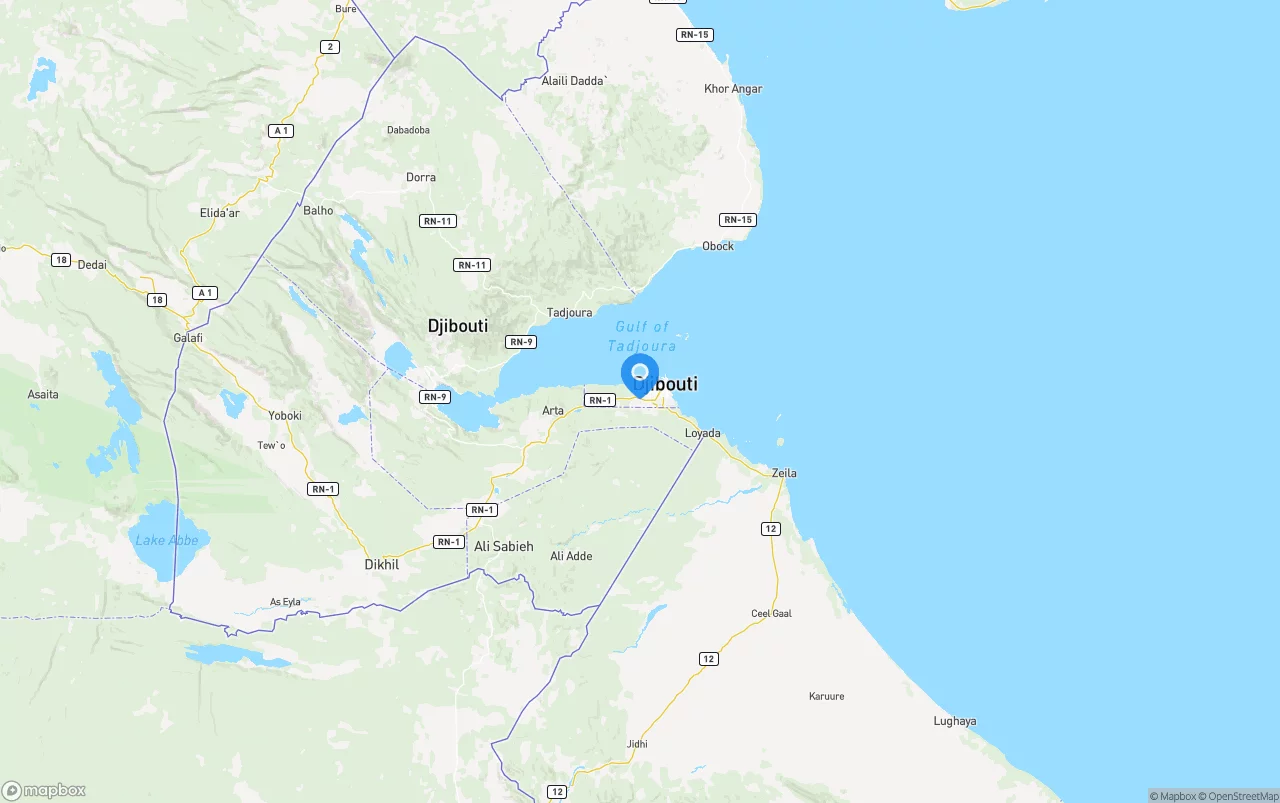 Djibouti Port: Djibouti Port is the main port in Djibouti, serving as a key gateway for imports and exports to and from East Africa. It is strategically located at the crossroads of major shipping routes, making it a vital hub for maritime trade in the region. The port consists of several terminals, including a container terminal, a general cargo terminal, and a livestock terminal.
The container terminal is equipped with modern facilities and equipment to handle large volumes of containers efficiently. It has a deep-water berthing facility that can accommodate some of the largest container vessels in the world. The terminal is operated by a private company under a concession agreement with the government of Djibouti, ensuring smooth operations and high service standards.
The general cargo terminal handles a variety of non-containerized cargo, including bulk cargo, project cargo, and vehicles. It is equipped with specialized handling equipment to cater to the specific needs of different types of cargo. The terminal plays a crucial role in supporting various industries in Djibouti and facilitating trade with neighboring countries.
The livestock terminal is a specialized facility for handling live animals, primarily for export to markets in the Middle East and Asia. The terminal is designed to ensure the welfare of animals during transit, with facilities for feeding, watering, and veterinary care. Strict health and safety standards are enforced to comply with international regulations.
Overall, Djibouti Port plays a key role in facilitating trade and commerce in the region, serving as a crucial link between East Africa and the rest of the world. Its modern facilities, efficient operations, and strategic location make it a preferred choice for shipping lines and cargo owners.


At FWFreight, we offer comprehensive international container shipping services tailored to meet your needs. We provide efficient and reliable shipping solutions from Madagascar to Djibouti. Here's a breakdown of our shipping options:
LCL from Madagascar to Djibouti (Less than Container Load):
For smaller shipments that don't fill an entire container, our LCL service is the perfect solution. We consolidate multiple shipments into one container, saving you time and money. With regular departures to Djibouti from Madagascar. Your cargo will reach its destination securely and on schedule.
FCL from Madagascar to Djibouti (Full Container Load):
If you have enough cargo to fill a whole container, our FCL service offers exclusive use of a container. This ensures your goods remain secure and minimizes the risk of damage during transit. Choose to 20 FT, 40 FT, or 40 HC containers, depending on the volume and nature of your cargo.
Air Freight from Madagascar to Djibouti:
When time is of the essence, our air freight service provides swift delivery for urgent shipments. With extensive networks and partnerships, we guarantee efficient handling and timely delivery of your cargo to Djibouti to destinations across the globe.
Below is a table with Shipping Rates from Madagascar to Djibouti for various types of containers. You can use these Quick Quotes from Madagascar to Djibouti as a guideline. To get an Instant Rate from Madagascar to Djibouti for the necessary date, you can send a request.
For container transportation from Madagascar to Djibouti, various factors come into play. The size of the shipping container, the type of goods to be shipped, distance of the destination, and the shipping method (either Full Container Load or Less than Container Load) all directly affect the cost.
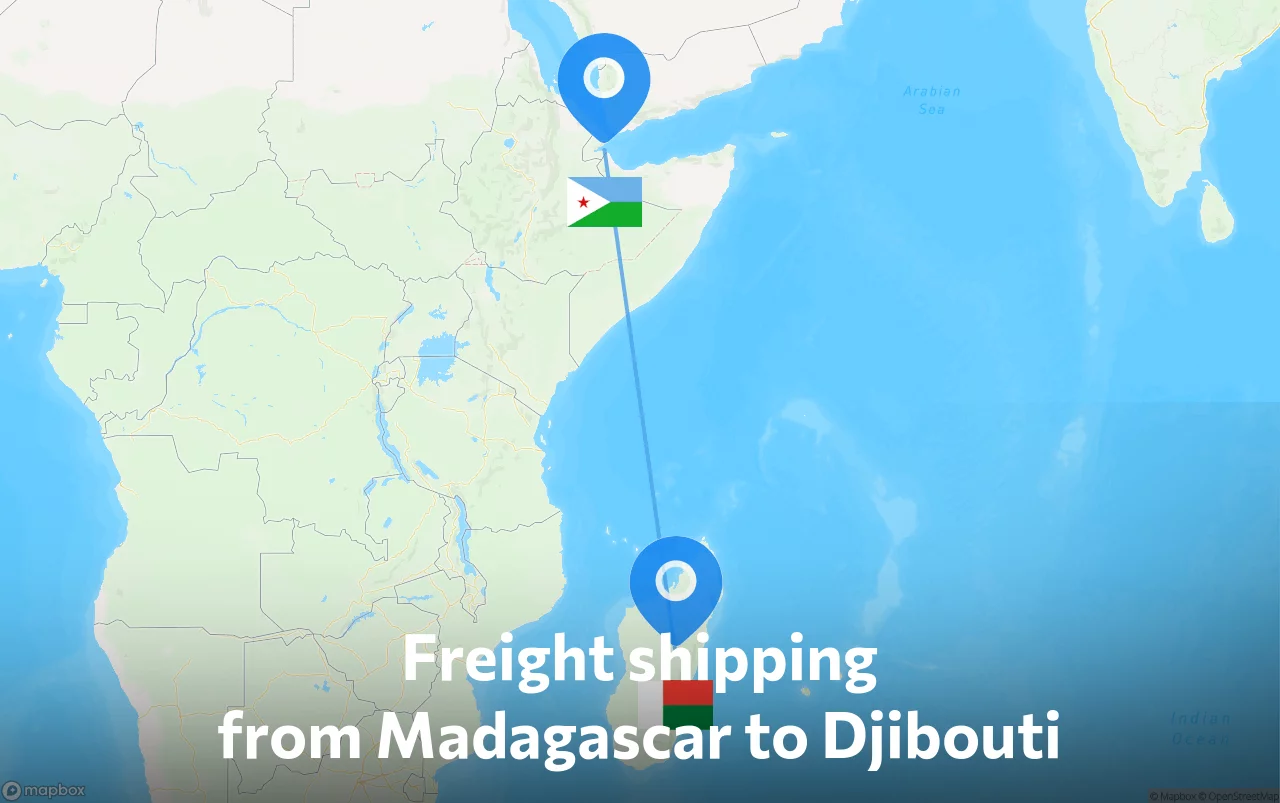 The average transit time for shipping cargo from Madagascar to Djibouti via sea freight typically ranges from 7 to 14 days. The exact duration can be influenced by various factors such as the distance between the two locations, the volume of cargo being transported, and the efficiency of logistics operations. Additionally, adverse weather conditions or port congestion may also contribute to potential delays in the delivery of the cargo. It is important for shippers to communicate closely with their freight forwarder to ensure timely and efficient transportation of goods between Madagascar and Djibouti.
When it comes to customs clearance, both Madagascar and Djibouti have well-established processes in place. On average, the customs clearance process in Madagascar can take anywhere from 3 to 7 days, depending on the complexity of the shipment. In Djibouti, customs clearance typically takes 2 to 5 days to complete. These timelines are subject to change based on the nature of the cargo and any additional documentation required. FWFreight is a reputable transport company that specializes in providing reliable and efficient transport services between Madagascar and Djibouti, ensuring smooth customs clearance and timely delivery of cargo.
 Welcome to FWFreight, your one-stop solution for 'Freight Shipping to Djibouti'. Our company specializes in both commercial and personal shipments to Djibouti from a multitude of international locations. Our core services encompass sea, air, rail, and truck transportation, suited to meet the demands of a wide range of clientele, from domestic exporters to global importers. We understand the intricacies of 'international shipping to Djibouti from other countries' and our team of skilled professionals is always prepared to navigate the complexities to ensure your goods reach their destination securely and swiftly.
FWFreight prides itself on the exceptional standards of service we provide. Regardless of the scope and scale of the logistics demand, we are committed to delivering the best service anywhere in the world. We understand that every client's requirements differ, and that's why we have tailored our services to be flexible and easily adaptable. Our forwarding services are designed to simplify the process, and we provide the most competitive rates in the industry. With FWFreight, you can rest assured that your cargo is in capable and experienced hands, making us your ideal partner for all your shipping and forwarding needs.