
For clients seeking premier freight shipping from Japan to Italy, look no further than FWFreight. Our reputation as a top-rated logistics provider is hinged on our commitment to deliver exceptional service and a comprehensive suite of solutions. Our core services encompass sea, air, rail, and truck shipping - all aimed at addressing our clients' varied needs. Moreover, recognizing the unique requirements of each operation, we offer tailored forwarding services adaptable to both domestic exporters and international shippers. We guarantee that entrusting your shipping matters to us equates to experiencing seamless, efficient, and reliable international shipping from Japan.
Our company's pledge to provide world-class service, however, is not simply grounded on the provision of various freight solutions. FWFreight aims to transcend the logistics sector standards by placing our customers at the heart of our operations. Every service is carefully designed and continuously improved to ensure we bring the best value to every transaction. From single package deliveries, large-scale freight transfers, to managing complex customs regulations, our focus is on delivering unparalleled customer satisfaction that leaves a lasting impression. Through our dedicated and highly skilled team, we stand ready to redefine your freight experience with tailored strategies, unwavering commitment, and a pursuit of excellence.
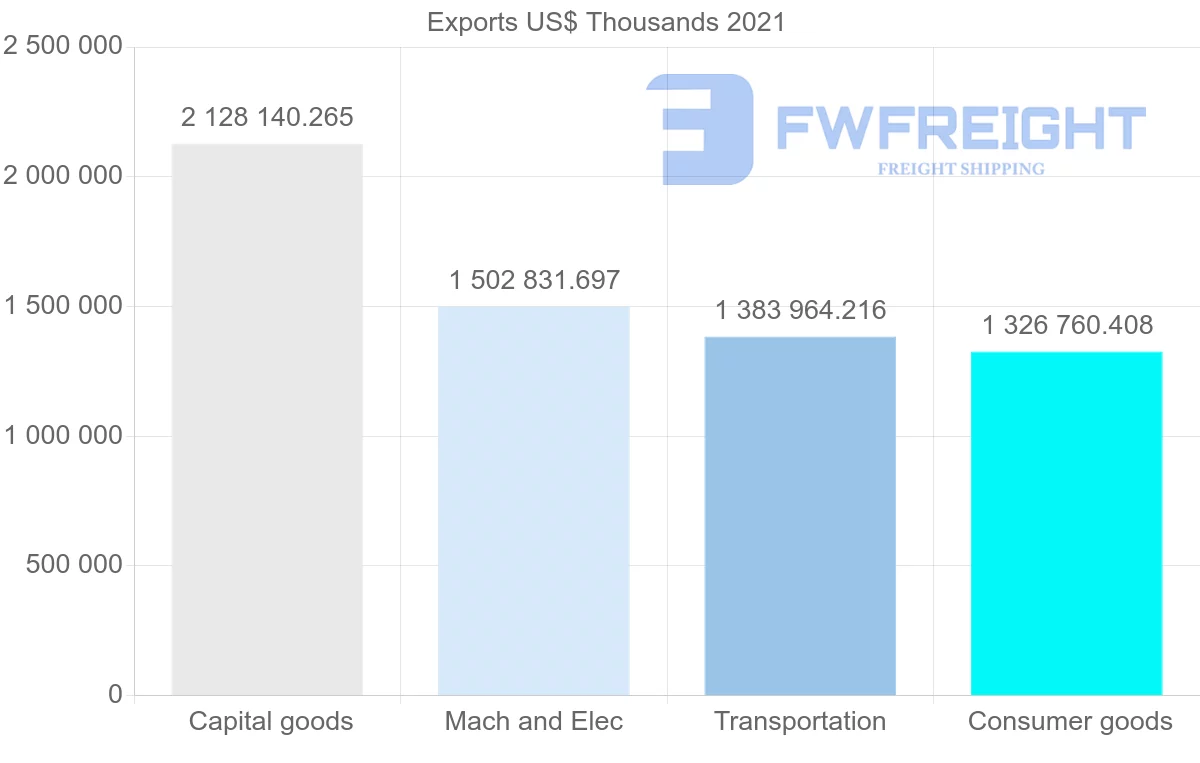 The top 5 export goods from Japan to Italy in 2021 are capital goods, machinery and electronics, transportation equipment, and consumer goods. Capital goods had the highest export value at $2,128.14 million, followed by machinery and electronics at $1,502.83 million, transportation equipment at $1,383.96 million, and consumer goods at $1,326.76 million. These goods constitute a significant portion of Japan's export volume to Italy, with capital goods alone accounting for nearly a quarter of the total export value.
Exports in these categories are important to Japan as they represent high-value manufactured products that are integral to the country's economy. These goods are primarily produced in regions such as Kanto, Kansai, and Chubu, which are known for their industrial clusters and advanced manufacturing capabilities. The production of capital goods, machinery, electronics, transportation equipment, and consumer goods in these regions helps drive Japan's export growth and economic development.
These goods are important for import into Italy as they represent advanced technologies, high-quality products, and innovative solutions that cater to the needs of Italian consumers and industries. Italy relies on imports from Japan to access cutting-edge technologies and equipment in sectors such as automotive, electronics, and consumer goods. Regions in Italy such as Lombardy, Emilia-Romagna, and Veneto are major recipients of these goods, as they have strong industrial bases and demand for high-quality imports from Japan. Overall, the export of capital goods, machinery, electronics, transportation equipment, and consumer goods from Japan to Italy plays a crucial role in strengthening economic ties between the two countries and driving bilateral trade growth.
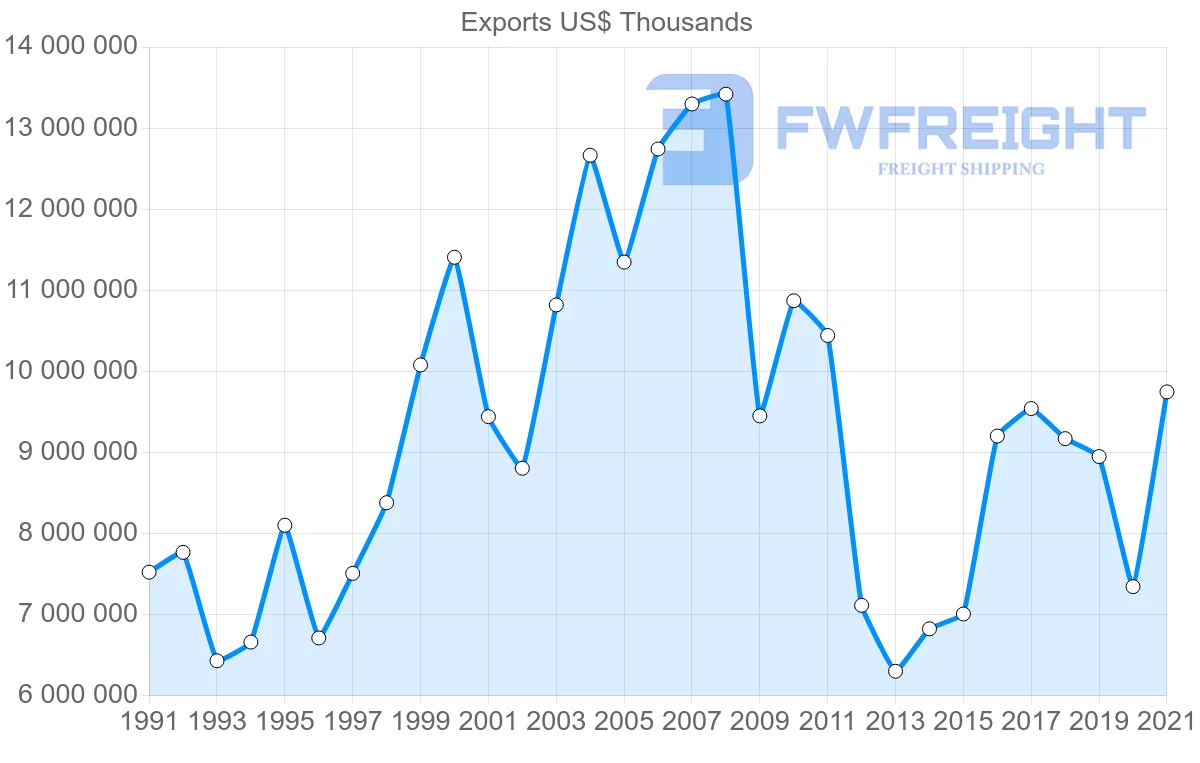 Over the past 30 years, the All Product Export from Japan to Italy has shown a steady increase, with some fluctuations along the way. The value of exports in 1991 was $7,522,410.447 million, and by 2021 it had risen to $9,745,987.436 million. This represents a growth of approximately 29.6% over the period. The export value experienced significant growth during the early 2000s, peaking in 2021. However, there were some minor declines in export value in 2001, 2009, and 2011 before rebounding in subsequent years.
Major developments in trade between Japan and Italy over the past 20 years include a diversification of exported product groups. While traditional exports such as automotive parts and electronics remain significant, there has been an increase in exports of consumer goods such as cosmetics, fashion items, and food products. This shift reflects changing consumer preferences and the growing demand for Japanese products in the Italian market. Additionally, there has been an increase in collaboration between Japanese and Italian companies, leading to the export of innovative products in sectors such as technology and healthcare. These developments have contributed to the overall growth in trade between the two countries.
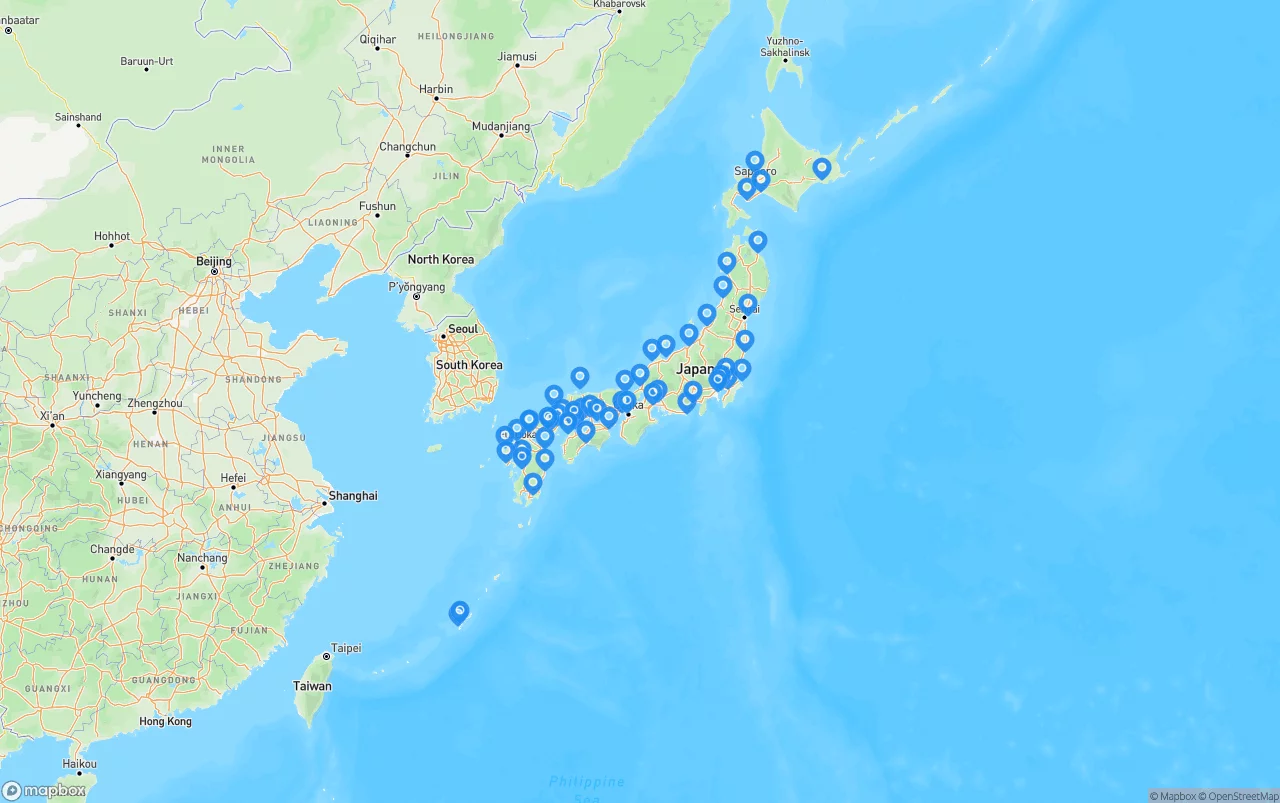 - Yokohama Port: Yokohama Port is one of the largest and busiest ports in Japan, handling a significant amount of container cargo as well as passenger ships. It is located in Kanagawa Prefecture, near Tokyo, making it a key gateway for international trade.
- Kobe Port: Kobe Port is a major port in Japan, situated in Hyogo Prefecture. It serves as a crucial hub for both cargo and passenger ships, with a particular focus on container handling. The port is known for its efficient operations and modern facilities.
- Nagoya Port: Nagoya Port is a vital port in the Chubu region of Japan, playing a key role in the country's economy. It handles a diverse range of cargo, including containers, automobiles, and bulk goods. The port's strategic location and excellent infrastructure contribute to its significance.
- Osaka Port: Osaka Port is a major port in Japan, located in Osaka Bay. It serves as a key gateway for international trade, handling a large volume of container traffic. The port is known for its efficient operations, advanced technology, and convenient access to inland transportation networks.
- Tokyo Port: Tokyo Port is a prominent port in Japan, situated in the capital city of Tokyo. It is a vital hub for domestic and international trade, with a focus on container handling. The port's strategic location, extensive facilities, and advanced logistics services make it a crucial maritime gateway.
Other ports in Japan include Akita Port, Chiba Port, Fukuyama Port, Hachinohe Port, Hakata Port, Hamanda Port, Hiroshima Port, Hitachinaka Port, Hosojima Port, Imabari Port, Imari Port, Ishikari Port, Iwakuni Port, Iyomishima Port, Kanazawa Port, Kashima Port, Kawasaki Port, Kochi Port, Kumamoto Port, Kushiro Port, Maizuru Port, Matsuyama Port, Mizushima Port, Moji Port, Muroran Port, Nagasaki Port, Naha Port, Nakanoseki Port, Naoetsu Port, Niigata Port, Oita Port, Okinawa Port, Omaezaki Port, Onahama Port, Sakaiminato Port, Sakata Port, Sendai Port, Shibushi Port, Shimizu Port, Shimonoseki Port, Takamatsu Port, Tokushima Port, Tokuyama Port, Tomakomai Port, Toyama Port, Tsuruga Port, Yatsushiro Port.
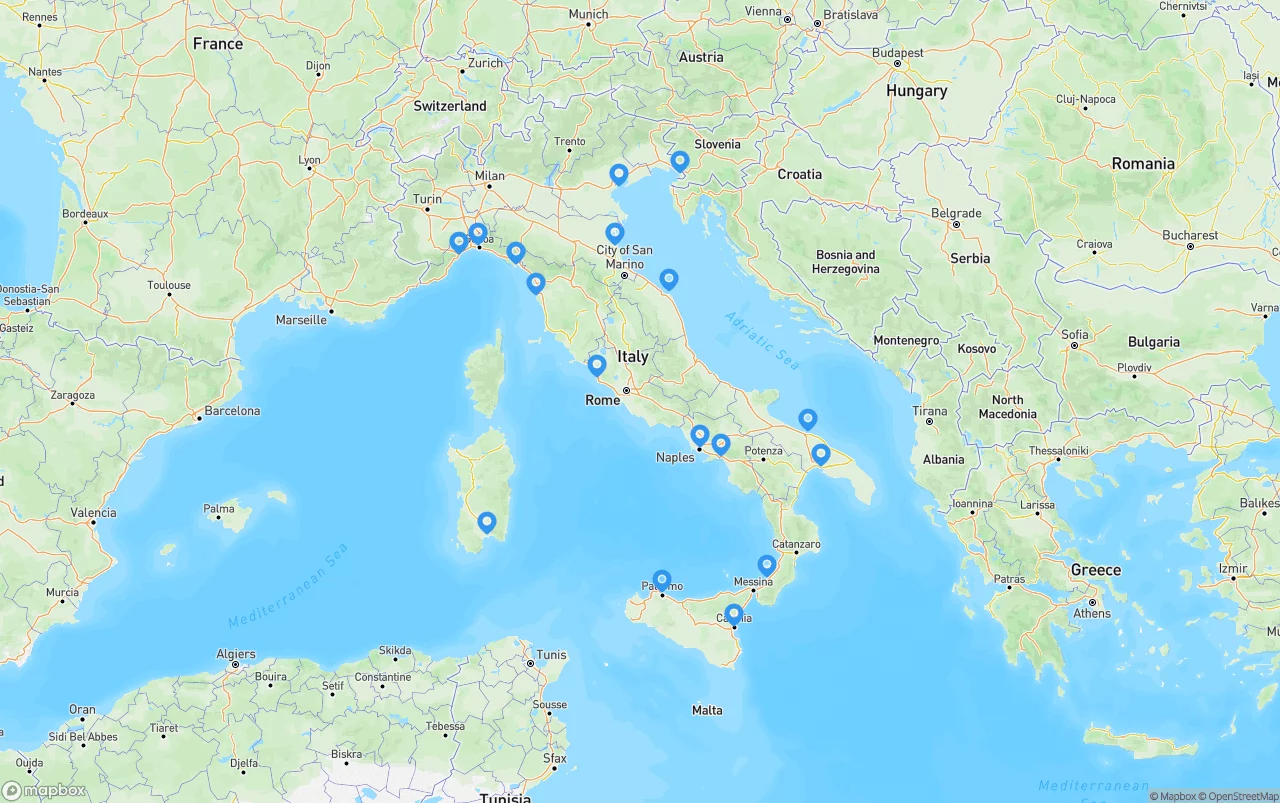 - Genova Port: Located on the northwest coast of Italy, Genova Port is the largest seaport in the country and one of the busiest in the Mediterranean. It serves as a major hub for container shipping, handling a wide range of goods including automobiles, oil, and chemicals.
- Gioia Tauro Port: Situated in Calabria, Gioia Tauro Port is one of the largest container ports in Italy. It is strategically located, making it an important transshipment hub for cargo heading to and from the Mediterranean, Europe, and beyond.
- La Spezia Port: La Spezia Port, located in Liguria, is a key commercial port handling various types of cargo such as containers, dry bulk, and liquid bulk. It is well-connected to major transport networks, making it a popular choice for shipping companies.
- Napoli Port: Napoli Port, located in the south of Italy, is a major gateway for passengers and cargo traveling to and from Southern Europe. It is a significant commercial port, handling goods such as food products, machinery, and textiles.
- Trieste Port: Trieste Port, situated in the northeast of Italy, is a strategic port serving as a gateway to Central and Eastern Europe. It is a major hub for container shipping, Ro-Ro cargo, and bulk commodities, making it a crucial link in the trans-European transport network.
Other notable ports in Italy include Ancona Port, Bari Port, Cagliari Port, Catania Port, Civitavecchia Port, Livorno Port, Palermo Port, Ravenna Port, Salerno Port, Taranto Port, Vado Ligure Port, and Venice Port. Each of these ports plays a vital role in Italy's maritime trade and transportation industry.
Looking for a freight forwarder in Japan and Italy? There is a list of the best freight forwarders, cargo agents, air, sea, land, river, railroad transport companies, logistics, brokers cargo services in Japan and Italy. Elevate your business's supply chain effectiveness by selecting the ideal freight forwarding partner.
Maximize your logistics efficiency between Japan and Italy by partnering with premier freight forwarders. These expert forwarders invest time to deeply understand your unique shipping requirements. Through a personalized and meticulous approach, they guarantee seamless shipment execution across borders, ensuring timely arrivals at every destination.


At FWFreight, we offer comprehensive international container shipping services tailored to meet your needs. We provide efficient and reliable shipping solutions from Japan to Italy. Here's a breakdown of our shipping options:
LCL from Japan to Italy (Less than Container Load):
For smaller shipments that don't fill an entire container, our LCL service is the perfect solution. We consolidate multiple shipments into one container, saving you time and money. With regular departures to Italy from Japan. Your cargo will reach its destination securely and on schedule.
FCL from Japan to Italy (Full Container Load):
If you have enough cargo to fill a whole container, our FCL service offers exclusive use of a container. This ensures your goods remain secure and minimizes the risk of damage during transit. Choose to 20 FT, 40 FT, or 40 HC containers, depending on the volume and nature of your cargo.
Air Freight from Japan to Italy:
When time is of the essence, our air freight service provides swift delivery for urgent shipments. With extensive networks and partnerships, we guarantee efficient handling and timely delivery of your cargo to Italy to destinations across the globe.
Below is a table with Shipping Rates from Japan to Italy for various types of containers. You can use these Quick Quotes from Japan to Italy as a guideline. To get an Instant Rate from Japan to Italy for the necessary date, you can send a request.
For container transportation from Japan to Italy, various factors come into play. The size of the shipping container, the type of goods to be shipped, distance of the destination, and the shipping method (either Full Container Load or Less than Container Load) all directly affect the cost.
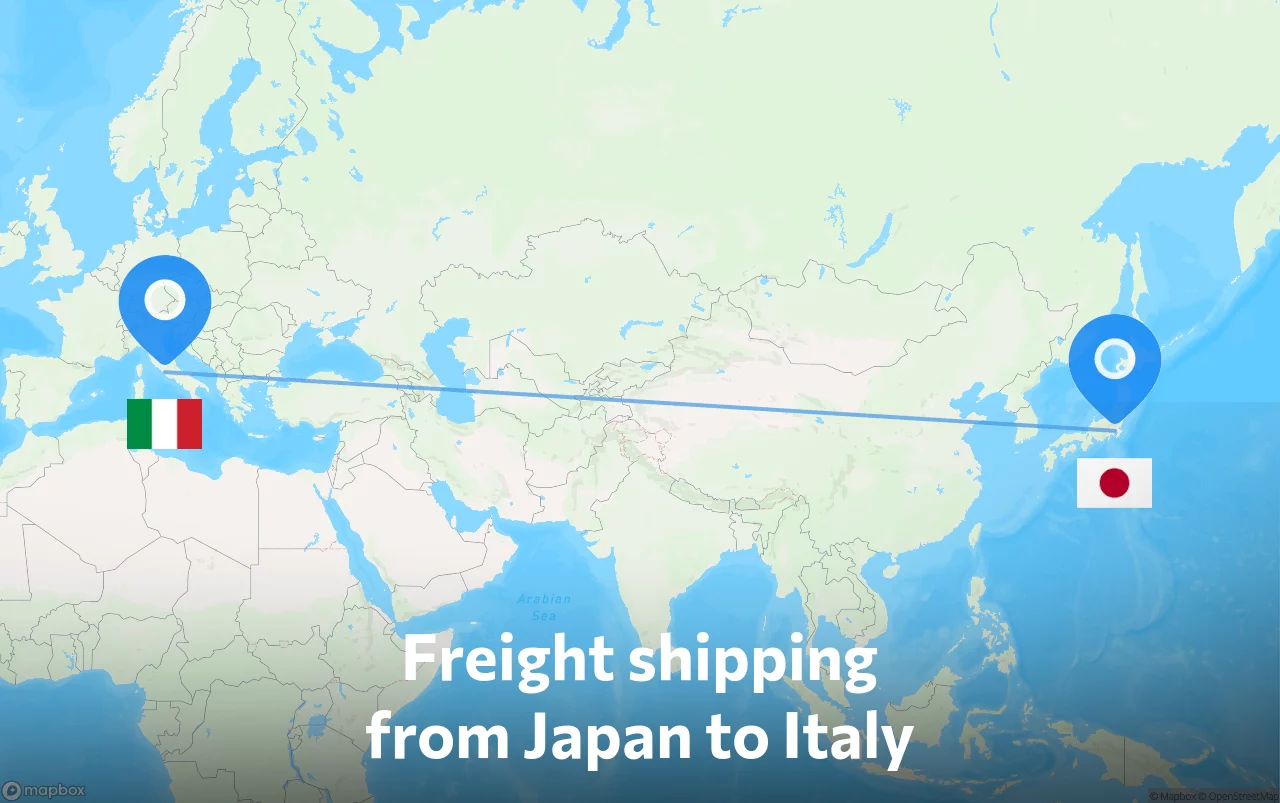 The average transit time for shipping cargo from Japan to Italy via sea freight typically ranges from 25 to 35 days. The distance between the two countries plays a significant role in determining the duration of the journey, as it covers a considerable distance across the Pacific Ocean, through the Suez Canal, and the Mediterranean Sea. Other factors that may affect transit times include weather conditions, port congestion, and any unforeseen logistical issues that may arise during the journey. It is essential for shippers to consider these factors when planning their shipments to ensure timely delivery of their cargo.
When it comes to customs procedures, both Japan and Italy have efficient systems in place to facilitate the smooth clearance of goods. On average, customs clearance in Japan takes around 2 to 3 days, while in Italy, it may take between 3 to 5 days. Despite these relatively quick processes, delays can occur due to various reasons, such as inaccurate documentation, inspections, or regulatory changes. By working with a reputable transportation company like FWFreight, which specializes in cargo transport between Japan and Italy, shippers can benefit from their expertise in navigating customs procedures and ensuring the timely delivery of their goods.
 FWFreight is your premier choice for freight shipping to Italy, providing an unparalleled suite of services to support your logistics needs. We understand the importance of time, cost and reliability in any successful business transaction. Therefore, we've curated a comprehensive range of solutions that cater to diverse shipping needs, whether via sea, air, rail, or truck. Our proficiency extends beyond simply delivering your goods. We also provide effective forwarding services to ensure smooth import to Italy from other countries. With FWFreight, you can expect seamless international shipping to Italy from other countries, backed by an industry-leading commitment to excellence.
From a service perspective, our company stands atop the logistics industry by offering world-class customer experience. We are deeply rooted in our commitment to developing flexible solutions that adapt to the unique needs of our diverse clientele, from domestic exporters to global importers. Our tailored solutions are brought to life by a dedicated team that goes above and beyond to warrant optimal results. We believe each shipment holds much more than just the material value, it holds the potential for a successful business transaction, the growth of a company, and the satisfaction of a client. Therefore, we position our shipping company as a strategic partner who delivers on its promise to ensure that you have the best service experience, regardless of the scale, size or complexity of your logistics requirements.