FWFreight prides itself on being a market leader in comprehensive freight shipping from Germany to Singapore. Our core services, ranging from sea, air, rail, to trucking, are meticulously designed to cater to a diverse roster of client needs—whether you're a domestic exporter seeking to transport goods within Germany or exploring international shipping to Singapore. Each service is perfectly orchestrated to ensure the swift, secure, and efficient delivery of your goods, making us the optimal choice for freight shipping from Germany.
From a service perspective, our company stands head and shoulders above the rest. We are deeply committed to providing world-class service, ensuring that every customer's unique needs are not just met, but exceeded. FWFreight is more than just a logistics provider—we're your partner in success, offering bespoke forwarding services that simplify and streamline the shipping process. No matter how complex your logistics needs may be, we strive to provide the best service in the world, underpinned by our unwavering commitment to customer satisfaction, advanced technological innovations, and a wealth of industry expertise.
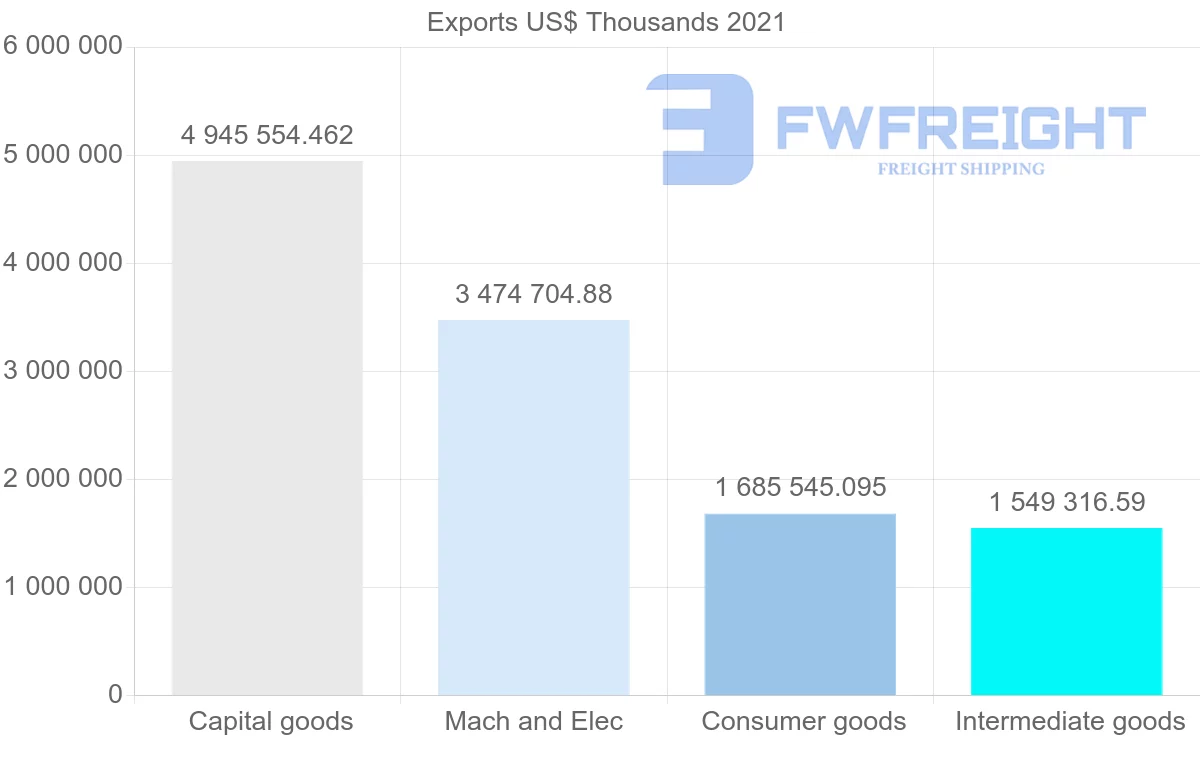 The top 5 export goods from Germany to Singapore in 2021 are capital goods, machinery and electrical equipment, consumer goods, and intermediate goods. Capital goods accounted for the highest export volume at $4945.554 million, followed by machinery and electrical equipment at $3474.705 million, consumer goods at $1685.545 million, and intermediate goods at $1549.317 million. Capital goods include items like industrial machinery and equipment, while machinery and electrical equipment encompass products such as electronics and appliances. Consumer goods consist of products for personal use, and intermediate goods are materials used in production processes.
Exports in these categories are important to Germany as they represent high-value manufactured goods that are crucial for the country's economy. The main regions in Germany where these goods are produced include Bavaria, North Rhine-Westphalia, and Baden-Württemberg. These regions are known for their strong industrial base and skilled workforce, making them key players in the production of capital goods, machinery, and electrical equipment. Consumer goods are also produced in these regions to meet domestic and international demand.
These goods are important for import into Singapore as they represent high-quality products that cater to the country's diverse consumer market. Singapore relies on imports for a large portion of its consumer and industrial needs, making goods from Germany highly sought after. The regions in Germany where these goods are supplied include Frankfurt, Hamburg, and Stuttgart, which are major hubs for international trade and commerce. The high quality and reliability of German goods make them popular choices for businesses and consumers in Singapore.
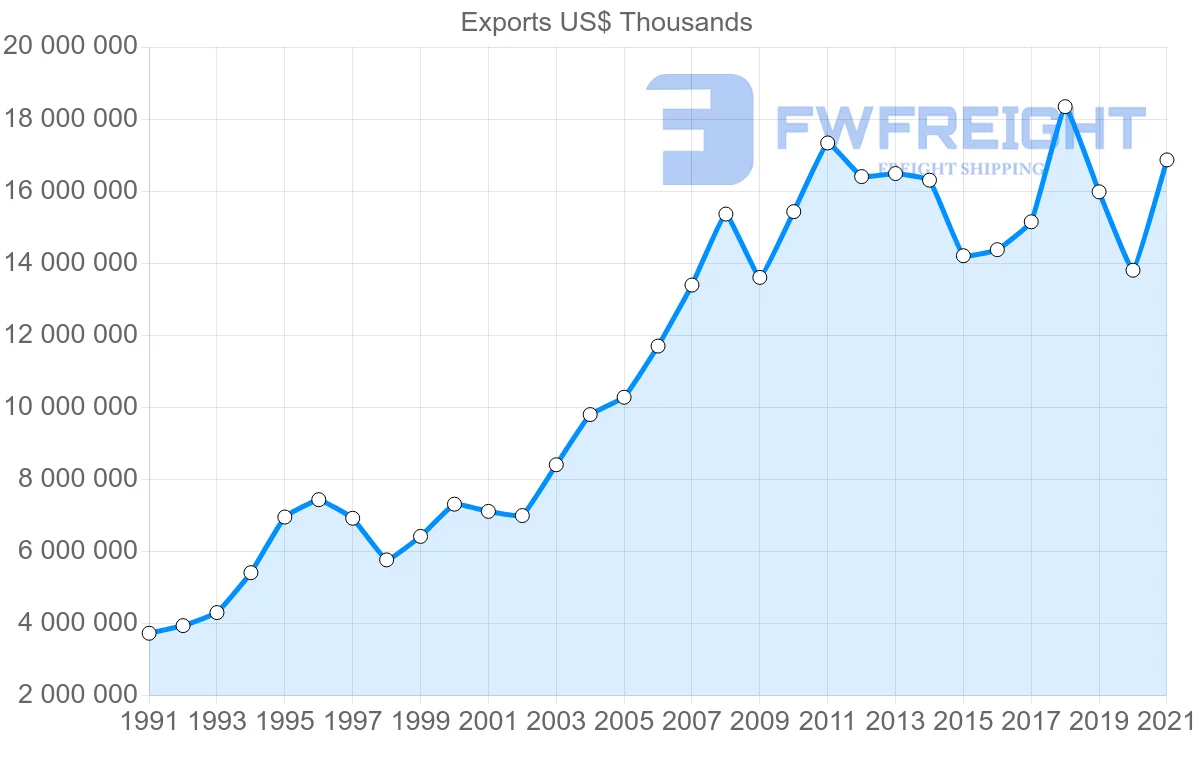 Over the past 30 years, the All Product Exports from Germany to Singapore have shown significant growth, with values increasing from 3,730,377.016 US dollars in 1991 to 16,866,533.5 US dollars in 2020. This represents a whopping 352.7% increase over the period. The trade between the two countries has seen steady growth, with some fluctuations in certain years. Notable peaks in export value occurred in 2005, 2014, and 2019, while there were slight dips in 1998 and 2008. The most substantial growth was observed in the early 2010s, with a rapid increase in trade value.
In terms of product groups exported from Germany to Singapore, machinery, vehicles, and electrical equipment are the main categories. Machinery includes industrial machinery, computers, and office equipment, while vehicles consist of automobiles and parts. Electrical equipment comprises electronics, telecommunication equipment, and electrical machinery. These product groups have consistently dominated the export market from Germany to Singapore over the years. Other significant exports include pharmaceuticals, chemicals, and optical instruments. The diversification of exports shows a robust trading relationship between the two countries, with a focus on high-tech and industrial goods.
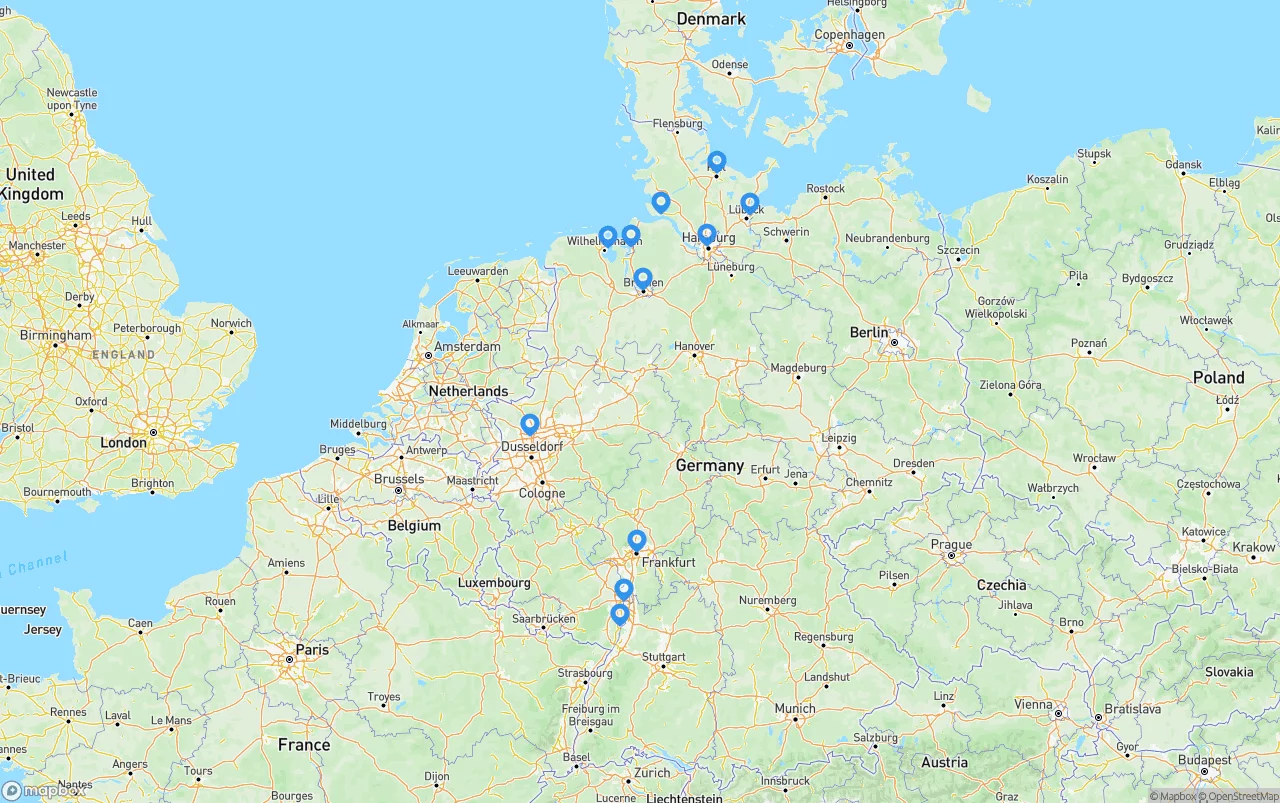 - Hamburg Port: Hamburg Port is the largest port in Germany and the third-largest in Europe. It is a major hub for container shipping, handling over 9 million TEUs annually. The port also handles a significant amount of general cargo, bulk cargo, and cruise ship traffic.
- Bremerhaven Port: Bremerhaven Port is a key port for Germany's automotive industry, with a dedicated terminal for vehicle exports. It is also an important hub for container shipping, handling around 5 million TEUs each year. The port is well-connected to inland transportation networks by road and rail.
- Bremen Port: Bremen Port is located on the Weser River and serves as an important gateway to northern Europe. It is a major hub for container shipping, handling over 4 million TEUs annually. The port also handles a diverse range of cargo, including bulk cargo and project cargo.
- Kiel Port: Kiel Port is the busiest passenger port in Germany, serving as a major ferry terminal for travel to Scandinavia and the Baltic states. The port also handles a variety of cargo, including containers, bulk cargo, and RoRo traffic. Kiel is an important hub for both passenger and cargo transportation.
- Duisburg Port: Duisburg Port is the largest inland port in Europe, located on the Rhine River. It is a key hub for container shipping, handling over 3 million TEUs annually. The port is well-connected to major European markets by inland waterways and rail, making it a vital link in the supply chain.
Other ports in Germany include BRUNSBUETTEL Port, FRANKFURT AM MAIN Port, Germersheim Port, LUBECK Port, Mannheim Port, and Wilhelmshaven Port. Each of these ports plays a unique role in Germany's maritime and inland transportation networks.
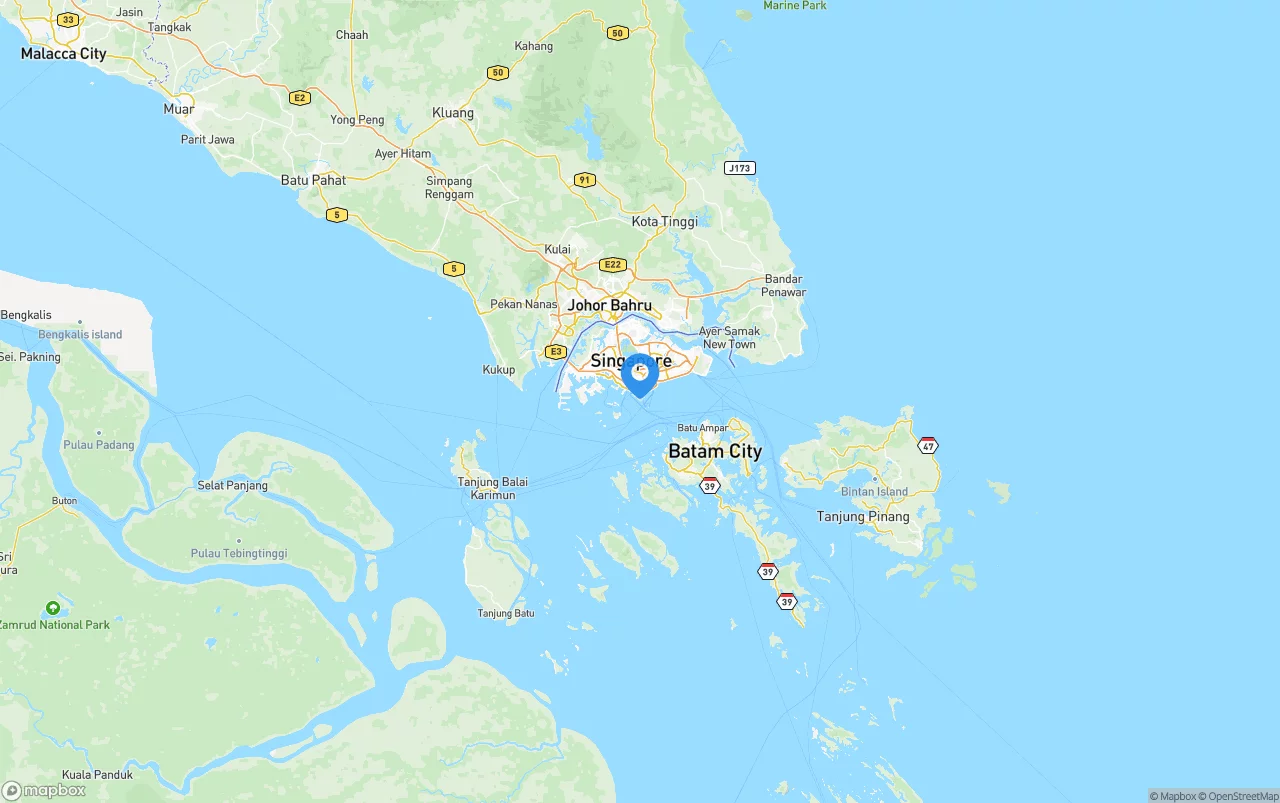 - Singapore Port: Singapore Port is the largest and busiest port in Singapore, handling a significant portion of the country's maritime trade. It is a major hub for container shipping, handling millions of TEUs annually. The port is equipped with state-of-the-art facilities and infrastructure to efficiently handle various types of cargo, including containers, bulk cargo, and liquid bulk. Singapore Port plays a crucial role in connecting Singapore to major global trade routes.
- Jurong Port: Jurong Port is another important port in Singapore, specializing in handling bulk and breakbulk cargo. It is strategically located in the southwestern part of Singapore, providing convenient access to industrial areas and transportation networks. Jurong Port is equipped with modern facilities and equipment to handle a wide range of cargo, including bulk commodities, project cargo, and general cargo. The port plays a vital role in supporting Singapore's industrial and economic activities.
- Keppel Terminal: Keppel Terminal is a key container terminal located within Singapore Port. It is operated by PSA International, one of the world's leading port operators. Keppel Terminal is equipped with advanced container handling equipment and technology to ensure efficient and reliable operations. The terminal serves as a major gateway for container shipping in the region, connecting Singapore to global trade networks.
- Tanjong Pagar Terminal: Tanjong Pagar Terminal is another container terminal within Singapore Port, managed by PSA Singapore Terminals. It is strategically located in the central part of Singapore, offering convenient access to major transportation routes. Tanjong Pagar Terminal is equipped with modern infrastructure and facilities to handle a large volume of containers efficiently. The terminal plays a crucial role in facilitating the flow of goods and cargo in and out of Singapore.
- Sembawang Wharves: Sembawang Wharves is a key port in Singapore, specializing in handling general and project cargo. It is located in the northern part of Singapore, providing easy access to industrial areas and transportation networks. Sembawang Wharves is equipped with versatile facilities and equipment to handle a wide range of cargo, including steel products, machinery, and equipment. The port serves as an important gateway for trade and logistics activities in the region.
Looking for a freight forwarder in Germany and Singapore? There is a list of the best freight forwarders, cargo agents, air, sea, land, river, railroad transport companies, logistics, brokers cargo services in Germany and Singapore. Elevate your business's supply chain effectiveness by selecting the ideal freight forwarding partner.
Maximize your logistics efficiency between Germany and Singapore by partnering with premier freight forwarders. These expert forwarders invest time to deeply understand your unique shipping requirements. Through a personalized and meticulous approach, they guarantee seamless shipment execution across borders, ensuring timely arrivals at every destination.


At FWFreight, we offer comprehensive international container shipping services tailored to meet your needs. We provide efficient and reliable shipping solutions from Germany to Singapore. Here's a breakdown of our shipping options:
LCL from Germany to Singapore (Less than Container Load):
For smaller shipments that don't fill an entire container, our LCL service is the perfect solution. We consolidate multiple shipments into one container, saving you time and money. With regular departures to Singapore from Germany. Your cargo will reach its destination securely and on schedule.
FCL from Germany to Singapore (Full Container Load):
If you have enough cargo to fill a whole container, our FCL service offers exclusive use of a container. This ensures your goods remain secure and minimizes the risk of damage during transit. Choose to 20 FT, 40 FT, or 40 HC containers, depending on the volume and nature of your cargo.
Air Freight from Germany to Singapore:
When time is of the essence, our air freight service provides swift delivery for urgent shipments. With extensive networks and partnerships, we guarantee efficient handling and timely delivery of your cargo to Singapore to destinations across the globe.
Below is a table with Shipping Rates from Germany to Singapore for various types of containers. You can use these Quick Quotes from Germany to Singapore as a guideline. To get an Instant Rate from Germany to Singapore for the necessary date, you can send a request.
For container transportation from Germany to Singapore, various factors come into play. The size of the shipping container, the type of goods to be shipped, distance of the destination, and the shipping method (either Full Container Load or Less than Container Load) all directly affect the cost.
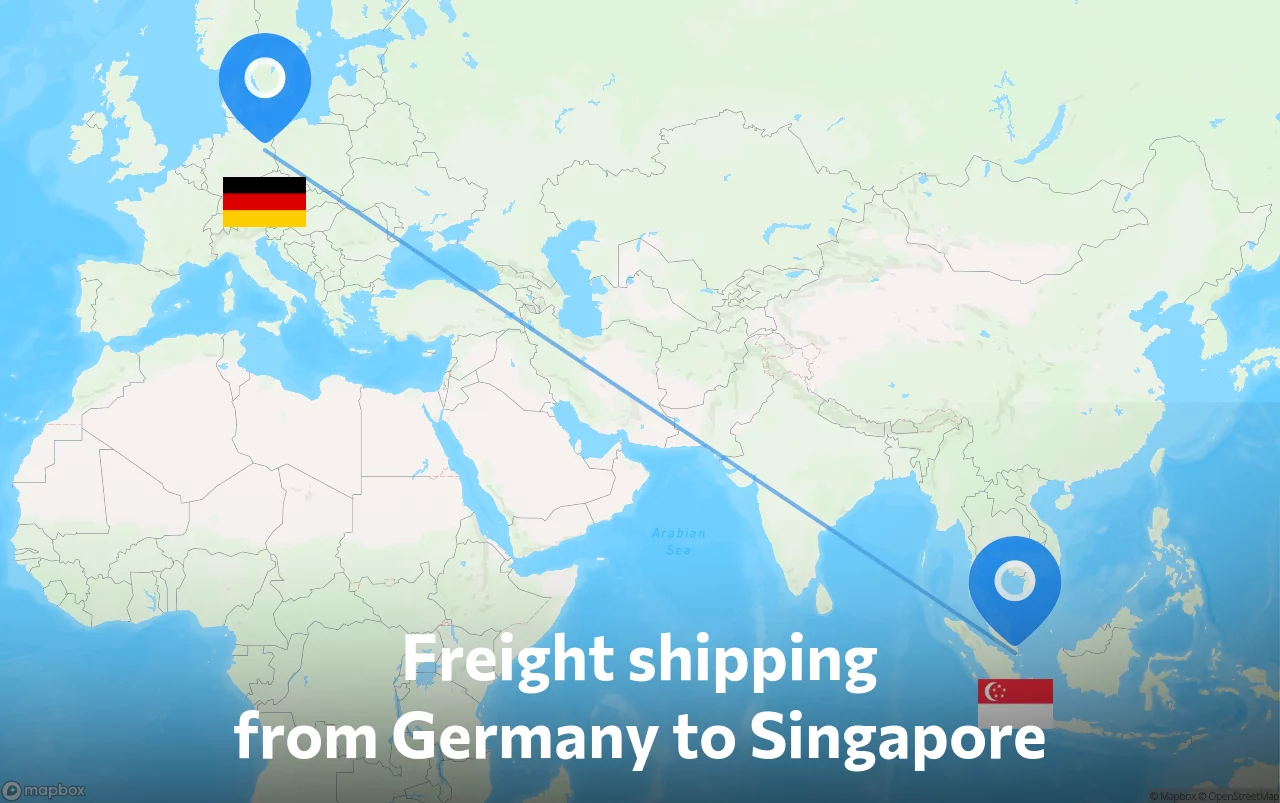 On average, shipping cargo from Germany to Singapore via sea freight typically takes around 25 to 35 days. The distance between the two countries, as well as the various logistical considerations involved in the shipping process, such as port congestion, weather conditions, and vessel schedules, all play a significant role in determining the transit time. Additionally, the type of cargo being transported and the specific route taken can also impact the overall shipping duration. It is important for shippers to factor in these variables when planning their shipments and to work with experienced logistics partners to ensure smooth and timely delivery.
Customs clearance procedures in both Germany and Singapore can also affect the overall shipping time. On average, customs clearance in Germany takes around 1 to 3 days, while in Singapore, it can range from 2 to 5 days, depending on the complexity of the shipment and adherence to regulations. Delays in customs can be mitigated by ensuring that all necessary documentation is in order, accurately declaring the contents of the cargo, and working closely with customs officials. By partnering with experienced logistics providers, such as FWFreight, shippers can navigate the complexities of customs clearance and streamline the shipping process, ultimately reducing the overall transit time. Working with knowledgeable partners can help ensure that shipments arrive on time and without unnecessary delays.
 At FWFreight, we specialize in ‘Freight Shipping to Singapore’, providing comprehensive logistics solutions that are tailored to meet the specific needs of our clientele. Our core services have been designed for domestic exporters and global importers who require reliable and timely Cargo delivery. Whether it's sea, air, rail, or truck transportation, we ensure your goods reach their destination intact and on schedule. With our vast experience in 'international shipping to Singapore from other countries', we are unmatched in providing a seamless experience for our clients, making us the perfect partner for your shipping requirements.
From a service perspective, our shipping company is committed to delivering the best service in the world for every customer. We understand that in logistics, the needs of each client are unique, hence we offer tailored forwarding services that address the specific needs of each of our customers. At FWFreight, we pride ourselves on offering an unrivaled blend of exceptional customer service and competitive prices for all types of transportation. Our team is not only experienced but also dedicated to ensuring the safe, efficient, and timely delivery of your goods. Trusting us with your shipping needs means you're in the hands of professionals who will treat your goods with utmost care and attention they deserve.