FWFreight is your premier destination for freight shipping from Germany to Lithuania, offering a comprehensive suite of logistics services designed to fulfill the varied shipment needs of businesses both large and small. Our company is adept at managing shipments across land, sea, air, or rail, making us uniquely equipped to handle any logistics challenge with precision, reliability, and efficiency. Whether it's domestic exporters seeking to move their products across borders or international importers looking to receive goods from Lithuania, FWFreight provides seamless, tailored solutions that ensure swift, secure, and efficient freight movement.
From a service perspective, our company stands out in the fiercely competitive world of logistics, making us a prominent figure in international shipping from Germany. We are committed to delivering unrivaled service quality, personalized to meet the unique demands of each client. Leveraging our global network, advanced technology, and seasoned expertise, we orchestrate flawless logistics operations, ensuring seamless workflow from the initial pick-up to the final delivery point. Regardless of shipment size or destination, our proficient teams strive to provide the best service in the world, transforming complex logistics challenges into stress-free experiences for every customer.
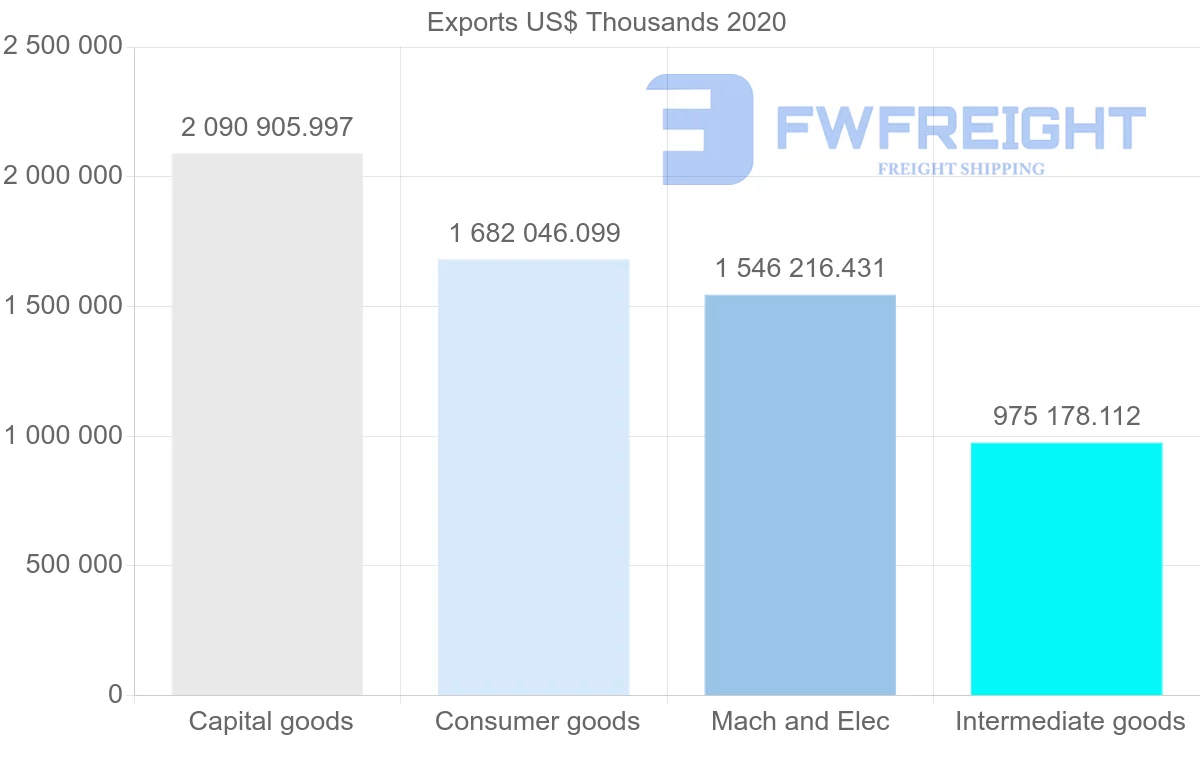 In 2020, Germany exported a total of $6,403.4 million worth of goods to Lithuania, with the top 5 export goods being capital goods ($2,090.6 million), consumer goods ($1,682.0 million), machinery and electronics ($1,546.2 million), and intermediate goods ($975.2 million). Capital goods, which include machinery and equipment used in production, accounted for the largest share of Germany's exports to Lithuania. Consumer goods, such as clothing and electronics, followed closely behind, highlighting the demand for German products in the Lithuanian market. Machinery and electronics, as well as intermediate goods like chemicals and components, also played significant roles in Germany's export trade with Lithuania.
Exports in these categories are crucial for Germany's economy, as they represent high-value products that contribute to the country's overall export revenue. These goods are often produced in the industrial regions of Germany, such as Bavaria, Baden-Württemberg, and North Rhine-Westphalia, where there is a strong concentration of manufacturing companies. These regions are known for their advanced technology and skilled workforce, making them key players in the production of capital goods, machinery, and electronics that are exported to Lithuania and other markets.
For Lithuania, importing these goods from Germany is essential for supporting its own manufacturing and production sectors. Capital goods and machinery are necessary for upgrading infrastructure and improving production efficiency, while consumer goods cater to the demand of Lithuanian consumers for high-quality products. These goods are supplied to various regions in Lithuania, including Vilnius, Kaunas, and Klaipėda, where there is a concentration of industries and commercial activity. By importing goods from Germany in these categories, Lithuania can benefit from the advanced technology and quality standards associated with German products.
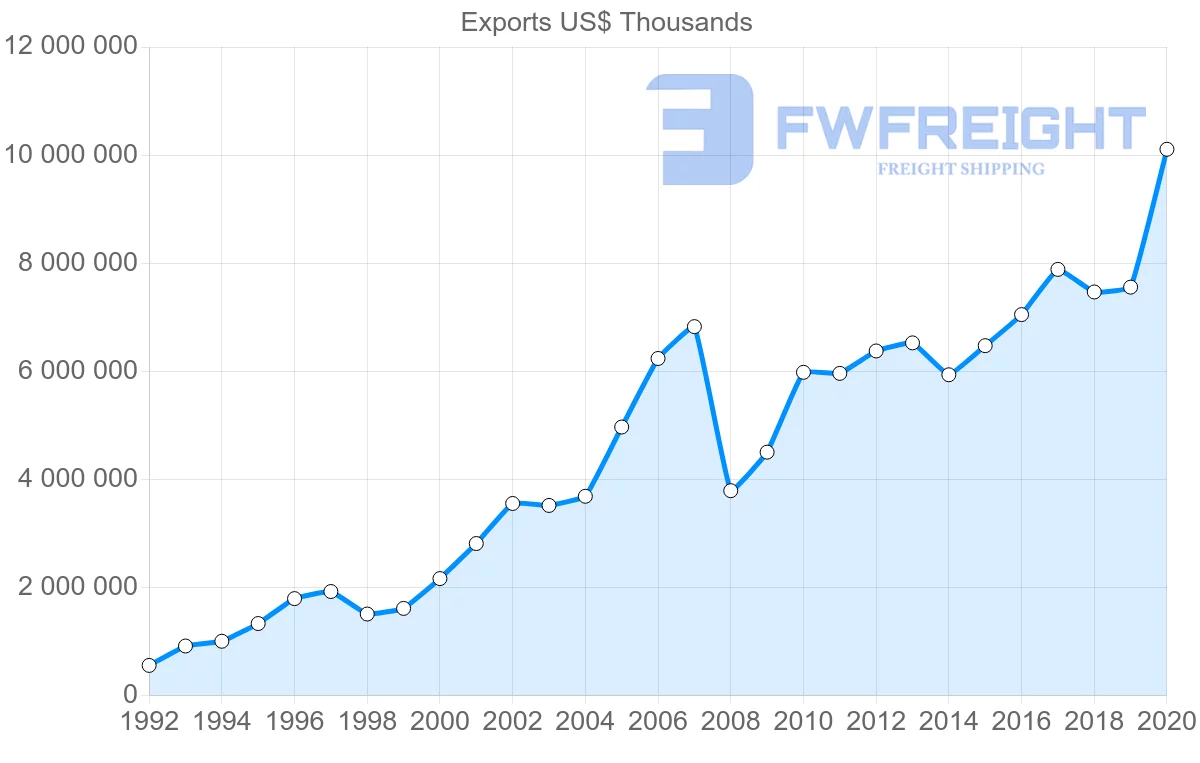 Over the past 28 years, the All Product Export from Germany to Lithuania has seen significant growth and fluctuations. The trade volume has increased from $558,553 million in 1992 to $10,107,769 million in 2020, representing a substantial growth of over 1700%. There have been periods of rapid growth, such as between 2002 and 2007 when the export value more than doubled from $3,554,375 million to $6,826,411 million. However, there have also been fluctuations and downturns, with the export value dropping in 2008 and 2009 due to the global financial crisis. Despite these challenges, trade between the two countries has shown resilience and continued to grow steadily over the years.
In terms of product groups, Germany has been exporting a variety of goods to Lithuania. Some of the main product groups include machinery, vehicles, electronics, pharmaceuticals, and chemical products. Machinery and vehicles have been consistently among the top exports, indicating the strong industrial and manufacturing sectors in Germany. Electronics and pharmaceuticals have also been significant exports, reflecting Germany's expertise in these industries. The trade relationship between Germany and Lithuania is diverse and dynamic, with a wide range of products being exchanged between the two countries.
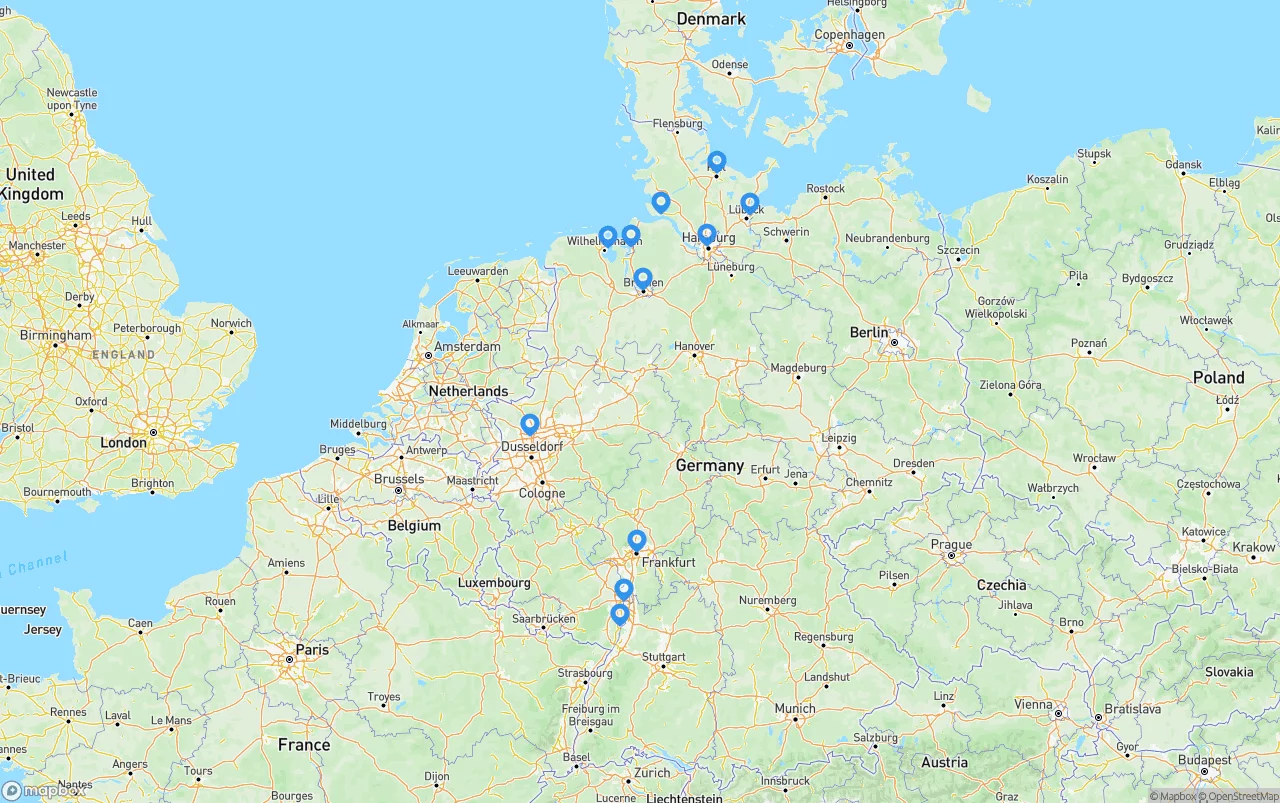 - Hamburg Port: Hamburg Port is the largest port in Germany and the third-largest in Europe. It is a major hub for container shipping, handling over 9 million TEUs annually. The port also handles a significant amount of general cargo, bulk cargo, and cruise ship traffic.
- Bremerhaven Port: Bremerhaven Port is a key port for Germany's automotive industry, with a dedicated terminal for vehicle exports. It is also an important hub for container shipping, handling around 5 million TEUs each year. The port is well-connected to inland transportation networks by road and rail.
- Bremen Port: Bremen Port is located on the Weser River and serves as an important gateway to northern Europe. It is a major hub for container shipping, handling over 4 million TEUs annually. The port also handles a diverse range of cargo, including bulk cargo and project cargo.
- Kiel Port: Kiel Port is the busiest passenger port in Germany, serving as a major ferry terminal for travel to Scandinavia and the Baltic states. The port also handles a variety of cargo, including containers, bulk cargo, and RoRo traffic. Kiel is an important hub for both passenger and cargo transportation.
- Duisburg Port: Duisburg Port is the largest inland port in Europe, located on the Rhine River. It is a key hub for container shipping, handling over 3 million TEUs annually. The port is well-connected to major European markets by inland waterways and rail, making it a vital link in the supply chain.
Other ports in Germany include BRUNSBUETTEL Port, FRANKFURT AM MAIN Port, Germersheim Port, LUBECK Port, Mannheim Port, and Wilhelmshaven Port. Each of these ports plays a unique role in Germany's maritime and inland transportation networks.
 Klaipeda Port: Klaipeda Port is the main seaport of Lithuania, located on the Baltic Sea. It is the largest and busiest port in the country, handling a wide range of cargo including containers, bulk cargo, and liquid cargo. The port has modern facilities and equipment, making it an important hub for trade in the region.
Butinge Marine Terminal Port: Butinge Marine Terminal is an oil terminal located near Klaipeda Port. It is one of the main commercial ports in Lithuania, specializing in handling oil products. The terminal has deep-water berths and state-of-the-art infrastructure for the storage and transportation of oil.
Vilnius Port: Vilnius Port is an inland port located on the Neris River in the capital city of Vilnius. While smaller in size compared to the seaports, it plays a significant role in the transportation of goods within Lithuania. The port mainly handles bulk cargo and is connected to the country's railway network for efficient distribution.
Other ports in Lithuania include:
- Kaunas Port: Located on the Nemunas River, Kaunas Port is an important inland port handling cargo transportation in the central part of Lithuania.
- Kaliningrad Port: Situated in the Kaliningrad region, this port serves as an important transport link for Lithuania due to its proximity to the country's border.
Looking for a freight forwarder in Germany and Lithuania? There is a list of the best freight forwarders, cargo agents, air, sea, land, river, railroad transport companies, logistics, brokers cargo services in Germany and Lithuania. Elevate your business's supply chain effectiveness by selecting the ideal freight forwarding partner.
Maximize your logistics efficiency between Germany and Lithuania by partnering with premier freight forwarders. These expert forwarders invest time to deeply understand your unique shipping requirements. Through a personalized and meticulous approach, they guarantee seamless shipment execution across borders, ensuring timely arrivals at every destination.


At FWFreight, we offer comprehensive international container shipping services tailored to meet your needs. We provide efficient and reliable shipping solutions from Germany to Lithuania. Here's a breakdown of our shipping options:
LCL from Germany to Lithuania (Less than Container Load):
For smaller shipments that don't fill an entire container, our LCL service is the perfect solution. We consolidate multiple shipments into one container, saving you time and money. With regular departures to Lithuania from Germany. Your cargo will reach its destination securely and on schedule.
FCL from Germany to Lithuania (Full Container Load):
If you have enough cargo to fill a whole container, our FCL service offers exclusive use of a container. This ensures your goods remain secure and minimizes the risk of damage during transit. Choose to 20 FT, 40 FT, or 40 HC containers, depending on the volume and nature of your cargo.
Air Freight from Germany to Lithuania:
When time is of the essence, our air freight service provides swift delivery for urgent shipments. With extensive networks and partnerships, we guarantee efficient handling and timely delivery of your cargo to Lithuania to destinations across the globe.
Below is a table with Shipping Rates from Germany to Lithuania for various types of containers. You can use these Quick Quotes from Germany to Lithuania as a guideline. To get an Instant Rate from Germany to Lithuania for the necessary date, you can send a request.
For container transportation from Germany to Lithuania, various factors come into play. The size of the shipping container, the type of goods to be shipped, distance of the destination, and the shipping method (either Full Container Load or Less than Container Load) all directly affect the cost.
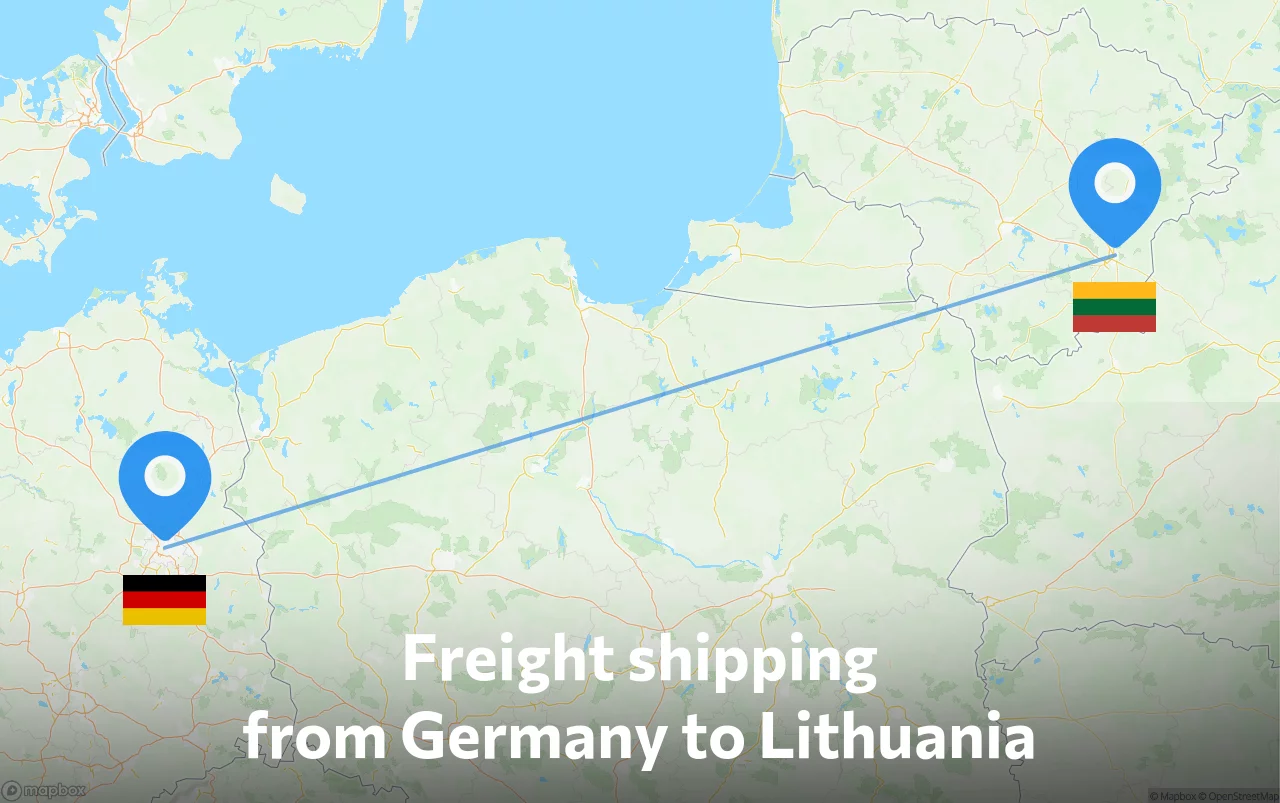 The average transit time for sea freight from Germany to Lithuania can vary depending on the specific route and carrier chosen. Generally, the distance between the two countries is around 1,000 kilometers, which typically translates to an average shipping time of 3-5 days. Factors that can affect this timeframe include the efficiency of logistics operations, weather conditions, and potential delays at ports. Shippers should also consider the mode of transportation within the two countries, as road or rail transport from the port to the final destination can add to the overall shipping time.
Customs clearance plays a crucial role in determining the overall shipping time from Germany to Lithuania. In Germany, customs procedures are known for their efficiency, with an average clearance time of 1-2 days. On the other hand, Lithuania's customs clearance process can take slightly longer, with an average delay of 2-3 days. To mitigate these delays, shippers should ensure all necessary documentation is filled out accurately and in advance. Working with experienced logistics partners, such as FWFreight, who specialize in the transport service on this route, can also help streamline the customs clearance process and ensure timely delivery of cargo. By partnering with experts in the field, shippers can minimize potential delays and ensure a smooth shipping experience from Germany to Lithuania.
 At FWFreight, we specialize in 'Freight Shipping to Lithuania.' Our core services are tailor-made to accommodate the diverse needs of clients seeking to export domestically, or import globally. Our proficiency in handling sea, air, rail, truck, and other forwarding services guarantees our clients efficient and reliable 'international shipping to Lithuania from other countries.' No matter the size or the nature of your cargo, we ensure its safe and timely delivery at the most competitive prices. When you choose FWFreight as your shipping and forwarding partner, you not only get the best value for your money but also the confidence that your freight is in the right hands.
We pride ourselves on our unparalleled service portfolio and the professional approach we employ in dealing with each shipment. Our deep understanding of global transportation networks, coupled with our commitment to customer satisfaction, sets us apart as a leading shipping and forwarding provider. Our company truly believes in offering the best service in the world, designed to deliver beyond expectations. We tailor our services to perfectly match each client’s logistics needs, operating in a seamless and efficient manner. Consequently, we've built a reputation for delivering an unmatched shipping experience every single time, solidifying us as the go-to choice for international and domestic shipping needs.