If you are searching for proficient services for freight shipping from Germany to Italy, your search ends at FWFreight. We specialize in comprehensive logistics solutions, adeptly handling sea, air, rail, and truck shipments. Our expertise ranges from catering to domestic exporters in Italy to facilitating international shipping from Germany for global importers. We ensure your cargo reaches its destination safely and on time with our core services, highlighting our credibility and commitment to excellence. You can rest assured knowing that your shipments are in competent hands.
Viewing our services through a global lens, FWFreight is a pioneer in the logistics industry. We are fully dedicated to delivering world-class service to every customer we serve, irrespective of the size or complexity of their shipping needs. Our team of logistics experts works relentlessly to tailor and execute the most efficient and cost-effective forwarding services, ensuring seamless transportation and delivery of cargo. With us, every client experiences world-class shipping and forwarding services. Truly, we are unmatched in providing professional and trustworthy logistics solutions.
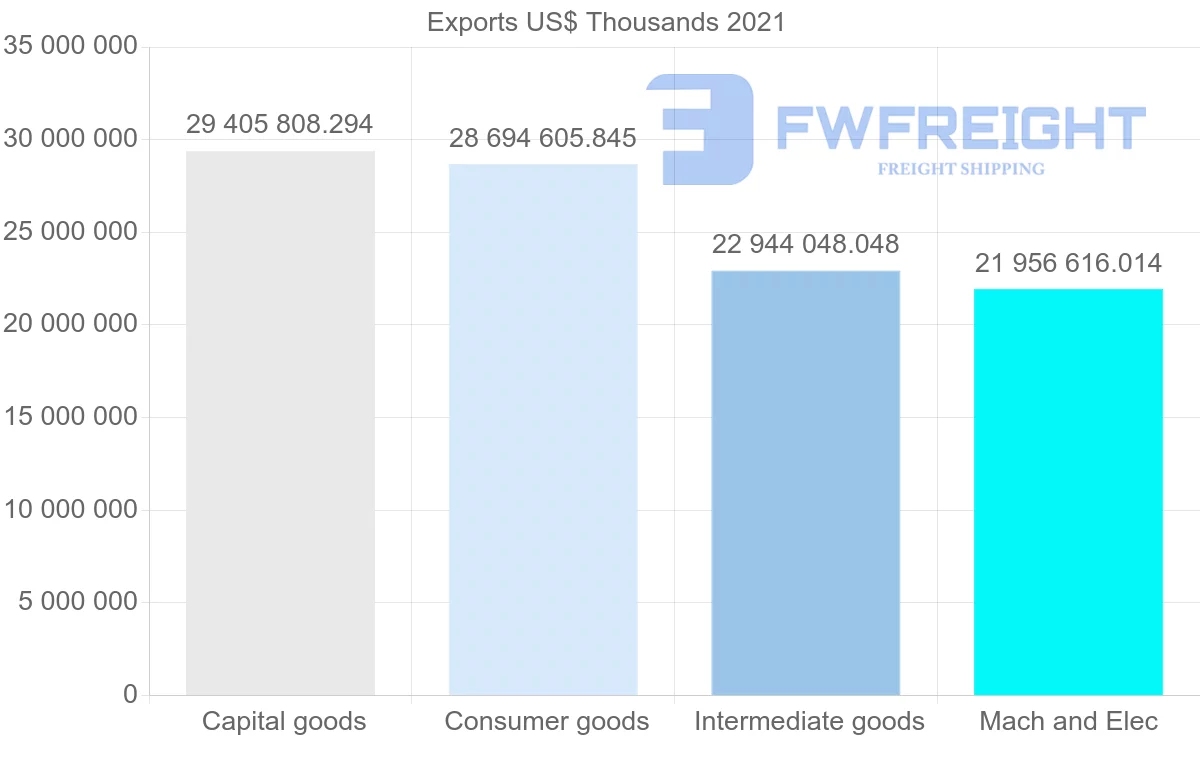 The top 5 export goods from Germany to Italy in 2021 were capital goods, consumer goods, intermediate goods, machinery, and electrical equipment. The highest export volume was in capital goods, totaling $29,405.81 million US dollars, followed closely by consumer goods at $28,694.61 million US dollars. Intermediate goods came in third at $22,944.05 million US dollars, with machinery and electrical equipment rounding out the top 5 at $21,956.62 million US dollars.
Exports in these categories are important to Germany as they represent high-value products that showcase the country's advanced manufacturing capabilities. Capital goods, consumer goods, and machinery are produced in regions such as Bavaria, Baden-Württemberg, and North Rhine-Westphalia. These regions are known for their strong industrial base and skilled workforce, making them ideal for producing and exporting these goods to Italy.
These goods are important for import into Italy as they fuel the country's economic growth and industrial development. Capital goods are essential for upgrading Italy's infrastructure and machinery, while consumer goods cater to the demand for German-made products in the Italian market. Regions in Italy such as Lombardy, Emilia-Romagna, and Veneto are major importers of these goods due to their strong manufacturing sectors and consumer markets. Overall, the export of these goods from Germany to Italy contributes significantly to the economic partnership between the two countries.
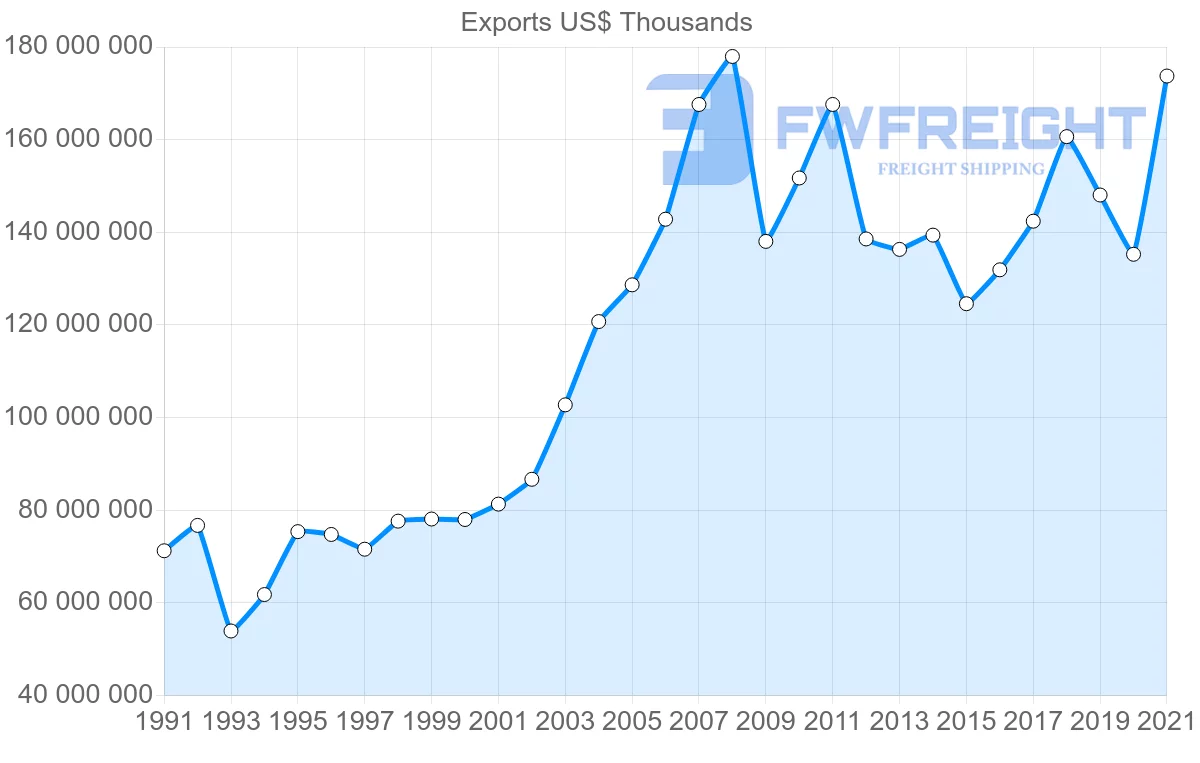 Over the past 30 years, the export of all products from Germany to Italy has seen significant fluctuations. In 1991, the value stood at 71.3 million USD and gradually increased to 167.6 million USD in 2007. However, there was a notable decline in 2008 to 138 million USD, likely due to the global financial crisis. The trade then rebounded and reached a peak in 2020 at 202.6 million USD. Despite the challenges faced in 2020 due to the COVID-19 pandemic, the trade between the two countries remained resilient.
The main product groups exported from Germany to Italy include machinery, vehicles, chemical products, electronics, and pharmaceuticals. Machinery and vehicles have consistently been the top exports, showcasing the strength of Germany's manufacturing industry. Chemical products and pharmaceuticals have also seen steady growth over the years, indicating the importance of these sectors in the bilateral trade relationship. Electronics have emerged as a significant export category in recent years, reflecting the growing demand for tech products in Italy. Overall, the trade between Germany and Italy has been dynamic and diverse, with both countries benefiting from strong economic ties.
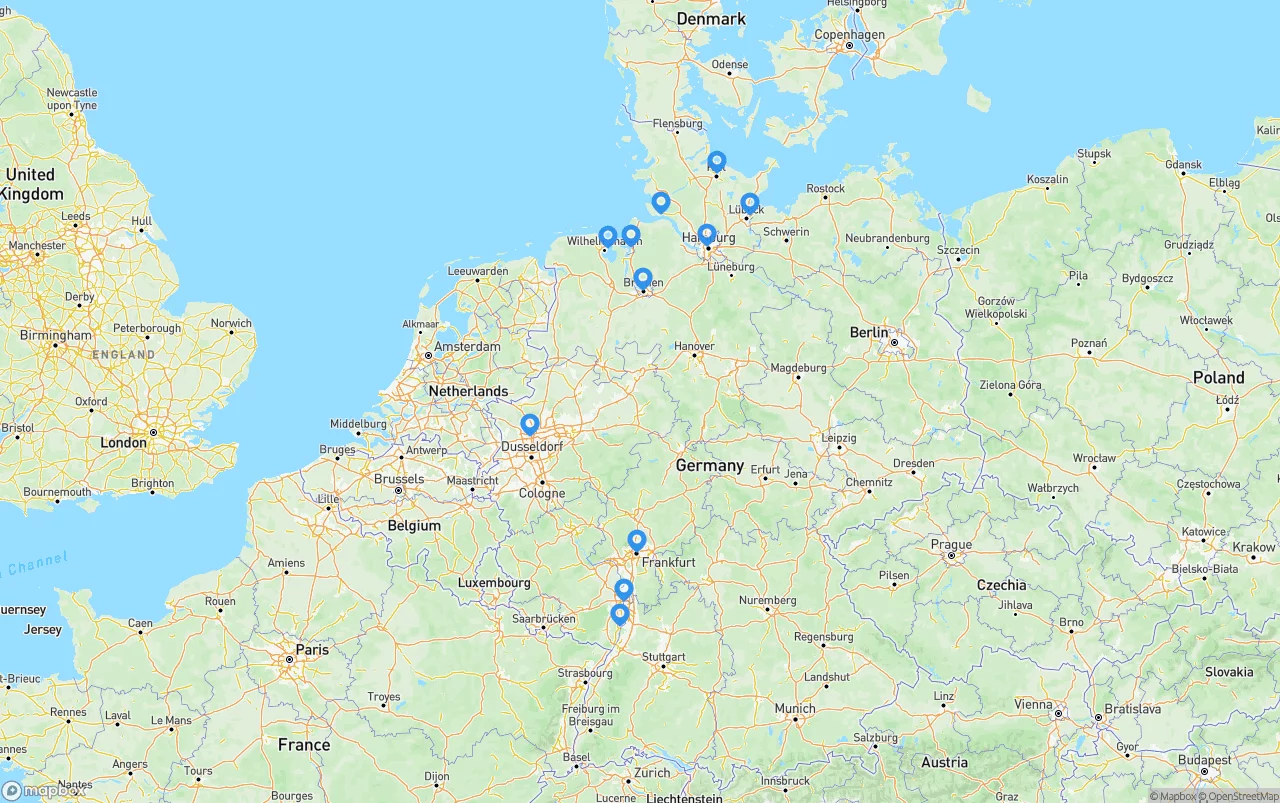 - Hamburg Port: Hamburg Port is the largest port in Germany and the third-largest in Europe. It is a major hub for container shipping, handling over 9 million TEUs annually. The port also handles a significant amount of general cargo, bulk cargo, and cruise ship traffic.
- Bremerhaven Port: Bremerhaven Port is a key port for Germany's automotive industry, with a dedicated terminal for vehicle exports. It is also an important hub for container shipping, handling around 5 million TEUs each year. The port is well-connected to inland transportation networks by road and rail.
- Bremen Port: Bremen Port is located on the Weser River and serves as an important gateway to northern Europe. It is a major hub for container shipping, handling over 4 million TEUs annually. The port also handles a diverse range of cargo, including bulk cargo and project cargo.
- Kiel Port: Kiel Port is the busiest passenger port in Germany, serving as a major ferry terminal for travel to Scandinavia and the Baltic states. The port also handles a variety of cargo, including containers, bulk cargo, and RoRo traffic. Kiel is an important hub for both passenger and cargo transportation.
- Duisburg Port: Duisburg Port is the largest inland port in Europe, located on the Rhine River. It is a key hub for container shipping, handling over 3 million TEUs annually. The port is well-connected to major European markets by inland waterways and rail, making it a vital link in the supply chain.
Other ports in Germany include BRUNSBUETTEL Port, FRANKFURT AM MAIN Port, Germersheim Port, LUBECK Port, Mannheim Port, and Wilhelmshaven Port. Each of these ports plays a unique role in Germany's maritime and inland transportation networks.
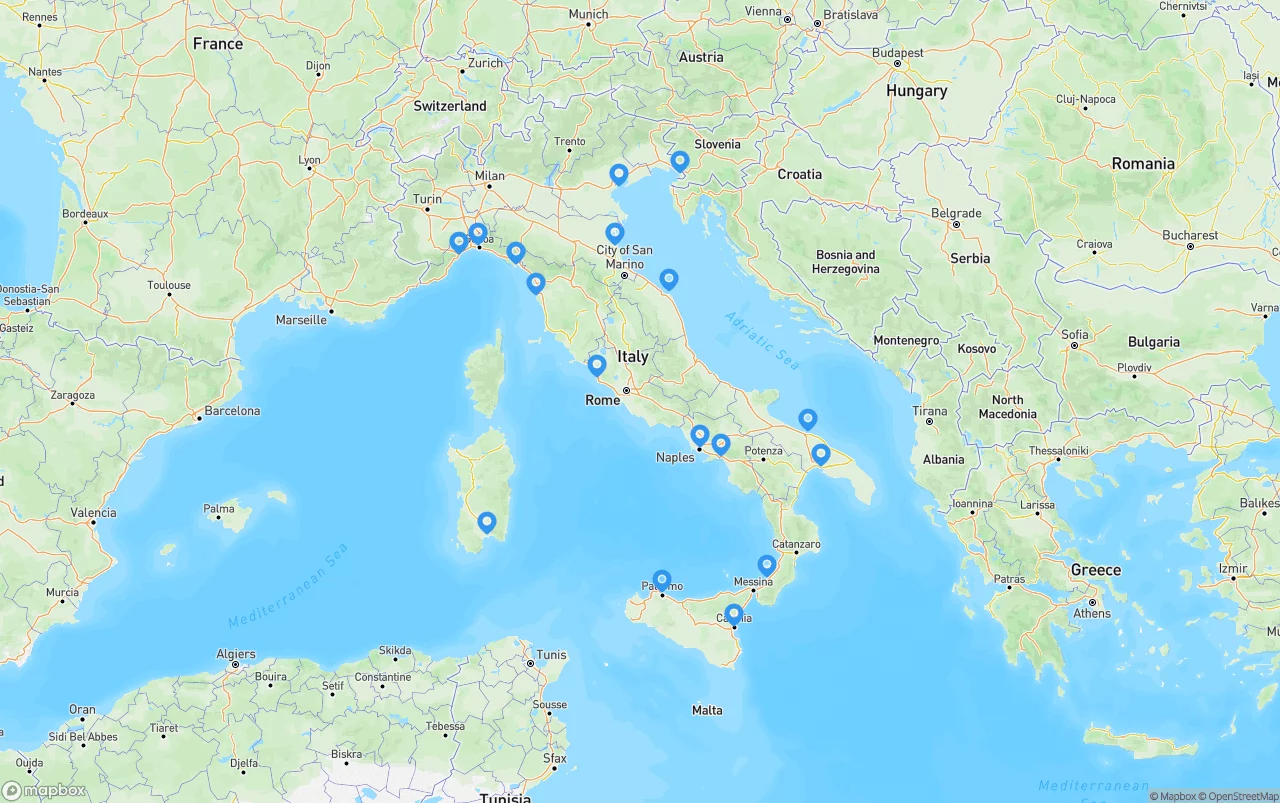 - Genova Port: Located on the northwest coast of Italy, Genova Port is the largest seaport in the country and one of the busiest in the Mediterranean. It serves as a major hub for container shipping, handling a wide range of goods including automobiles, oil, and chemicals.
- Gioia Tauro Port: Situated in Calabria, Gioia Tauro Port is one of the largest container ports in Italy. It is strategically located, making it an important transshipment hub for cargo heading to and from the Mediterranean, Europe, and beyond.
- La Spezia Port: La Spezia Port, located in Liguria, is a key commercial port handling various types of cargo such as containers, dry bulk, and liquid bulk. It is well-connected to major transport networks, making it a popular choice for shipping companies.
- Napoli Port: Napoli Port, located in the south of Italy, is a major gateway for passengers and cargo traveling to and from Southern Europe. It is a significant commercial port, handling goods such as food products, machinery, and textiles.
- Trieste Port: Trieste Port, situated in the northeast of Italy, is a strategic port serving as a gateway to Central and Eastern Europe. It is a major hub for container shipping, Ro-Ro cargo, and bulk commodities, making it a crucial link in the trans-European transport network.
Other notable ports in Italy include Ancona Port, Bari Port, Cagliari Port, Catania Port, Civitavecchia Port, Livorno Port, Palermo Port, Ravenna Port, Salerno Port, Taranto Port, Vado Ligure Port, and Venice Port. Each of these ports plays a vital role in Italy's maritime trade and transportation industry.
Looking for a freight forwarder in Germany and Italy? There is a list of the best freight forwarders, cargo agents, air, sea, land, river, railroad transport companies, logistics, brokers cargo services in Germany and Italy. Elevate your business's supply chain effectiveness by selecting the ideal freight forwarding partner.
Maximize your logistics efficiency between Germany and Italy by partnering with premier freight forwarders. These expert forwarders invest time to deeply understand your unique shipping requirements. Through a personalized and meticulous approach, they guarantee seamless shipment execution across borders, ensuring timely arrivals at every destination.


At FWFreight, we offer comprehensive international container shipping services tailored to meet your needs. We provide efficient and reliable shipping solutions from Germany to Italy. Here's a breakdown of our shipping options:
LCL from Germany to Italy (Less than Container Load):
For smaller shipments that don't fill an entire container, our LCL service is the perfect solution. We consolidate multiple shipments into one container, saving you time and money. With regular departures to Italy from Germany. Your cargo will reach its destination securely and on schedule.
FCL from Germany to Italy (Full Container Load):
If you have enough cargo to fill a whole container, our FCL service offers exclusive use of a container. This ensures your goods remain secure and minimizes the risk of damage during transit. Choose to 20 FT, 40 FT, or 40 HC containers, depending on the volume and nature of your cargo.
Air Freight from Germany to Italy:
When time is of the essence, our air freight service provides swift delivery for urgent shipments. With extensive networks and partnerships, we guarantee efficient handling and timely delivery of your cargo to Italy to destinations across the globe.
Below is a table with Shipping Rates from Germany to Italy for various types of containers. You can use these Quick Quotes from Germany to Italy as a guideline. To get an Instant Rate from Germany to Italy for the necessary date, you can send a request.
For container transportation from Germany to Italy, various factors come into play. The size of the shipping container, the type of goods to be shipped, distance of the destination, and the shipping method (either Full Container Load or Less than Container Load) all directly affect the cost.
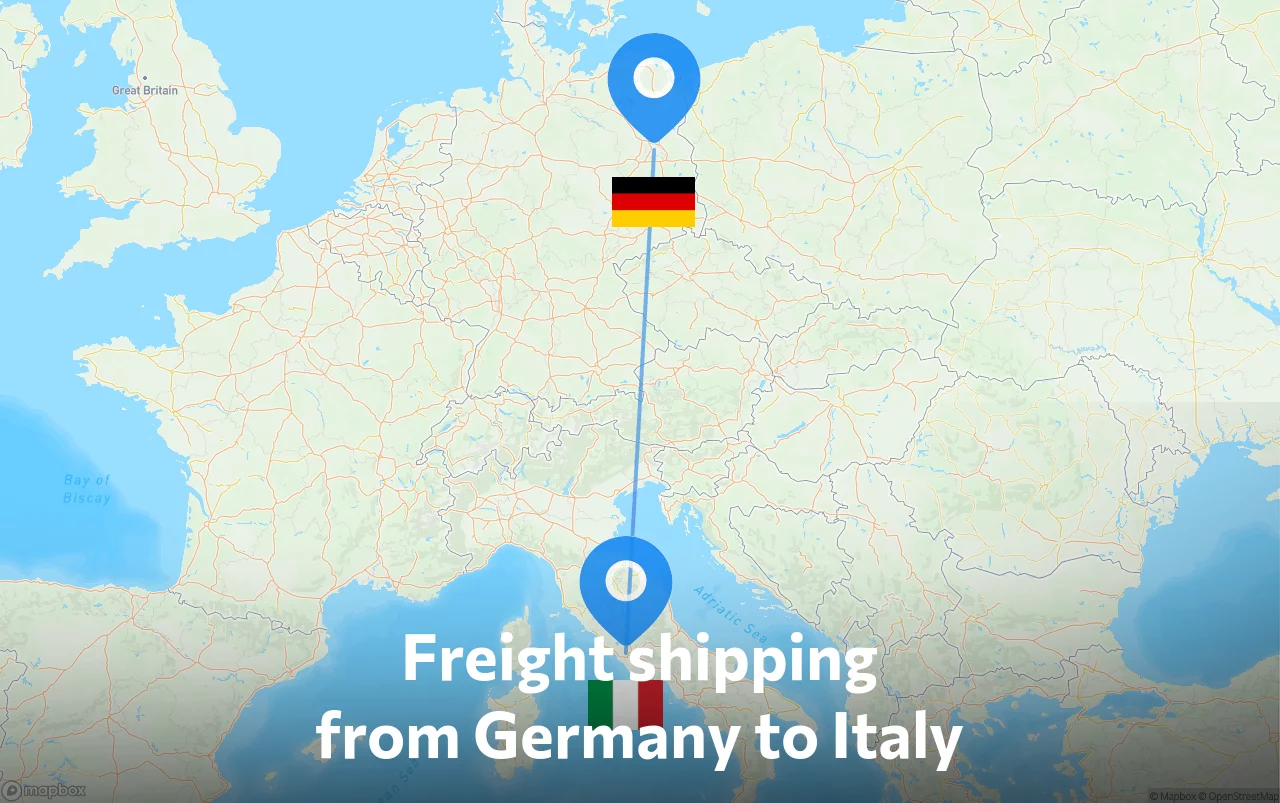 On average, sea freight cargo shipping from Germany to Italy takes around 5-7 days. This estimate can vary depending on the specific ports of origin and destination, as well as the distance between the two countries. Factors such as weather conditions, port congestion, and vessel schedules can also impact transit times. Additionally, the efficiency of logistics operations, such as loading and unloading processes, can influence how quickly cargo is transported between Germany and Italy by sea.
Customs clearance plays a crucial role in determining the overall shipping time from Germany to Italy. In Germany, customs clearance procedures are generally efficient, with an average delay time of 1-2 days. On the other hand, Italy's customs clearance process can be more complex, leading to an average delay time of 2-3 days. To mitigate potential delays, shippers can work with experienced logistics partners, such as FWFreight, who specialize in transport services between Germany and Italy. These partners can help navigate the customs process and ensure smooth and timely delivery of cargo. By collaborating with experts in the field, shippers can streamline their shipping operations and minimize any disruptions that may arise during the transit of goods between Germany and Italy.
 FWFreight is your premier choice for freight shipping to Italy, providing an unparalleled suite of services to support your logistics needs. We understand the importance of time, cost and reliability in any successful business transaction. Therefore, we've curated a comprehensive range of solutions that cater to diverse shipping needs, whether via sea, air, rail, or truck. Our proficiency extends beyond simply delivering your goods. We also provide effective forwarding services to ensure smooth import to Italy from other countries. With FWFreight, you can expect seamless international shipping to Italy from other countries, backed by an industry-leading commitment to excellence.
From a service perspective, our company stands atop the logistics industry by offering world-class customer experience. We are deeply rooted in our commitment to developing flexible solutions that adapt to the unique needs of our diverse clientele, from domestic exporters to global importers. Our tailored solutions are brought to life by a dedicated team that goes above and beyond to warrant optimal results. We believe each shipment holds much more than just the material value, it holds the potential for a successful business transaction, the growth of a company, and the satisfaction of a client. Therefore, we position our shipping company as a strategic partner who delivers on its promise to ensure that you have the best service experience, regardless of the scale, size or complexity of your logistics requirements.